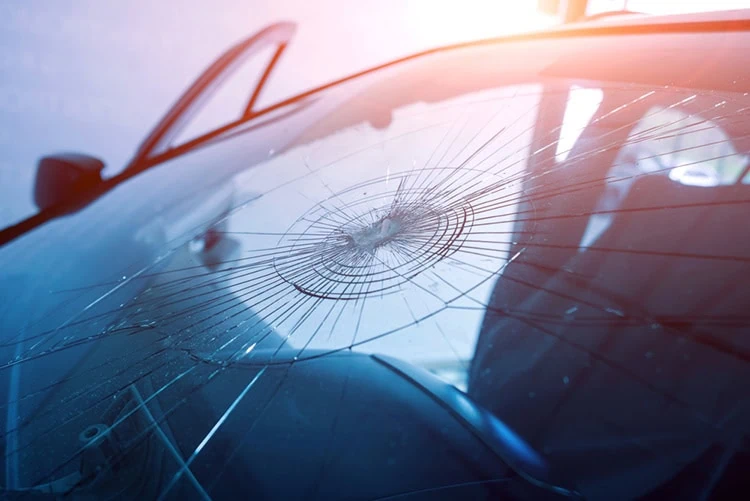
A cracked windshield isn't just annoying—it's a structural weak point that affects airbag deployment, roof strength, and modern safety systems your family depends on.
Share:
Summary:
Your windshield is engineered to be part of your vehicle’s safety cage. In a front-end collision, it provides up to 45% of the structural strength that keeps the cabin intact. During a rollover, that number jumps to 60%.
A crack changes everything. Even minor damage weakens the lamination layer that holds the glass together under pressure. When that structure is compromised, your windshield is far more likely to shatter or pop out during impact—exactly when you need it most.
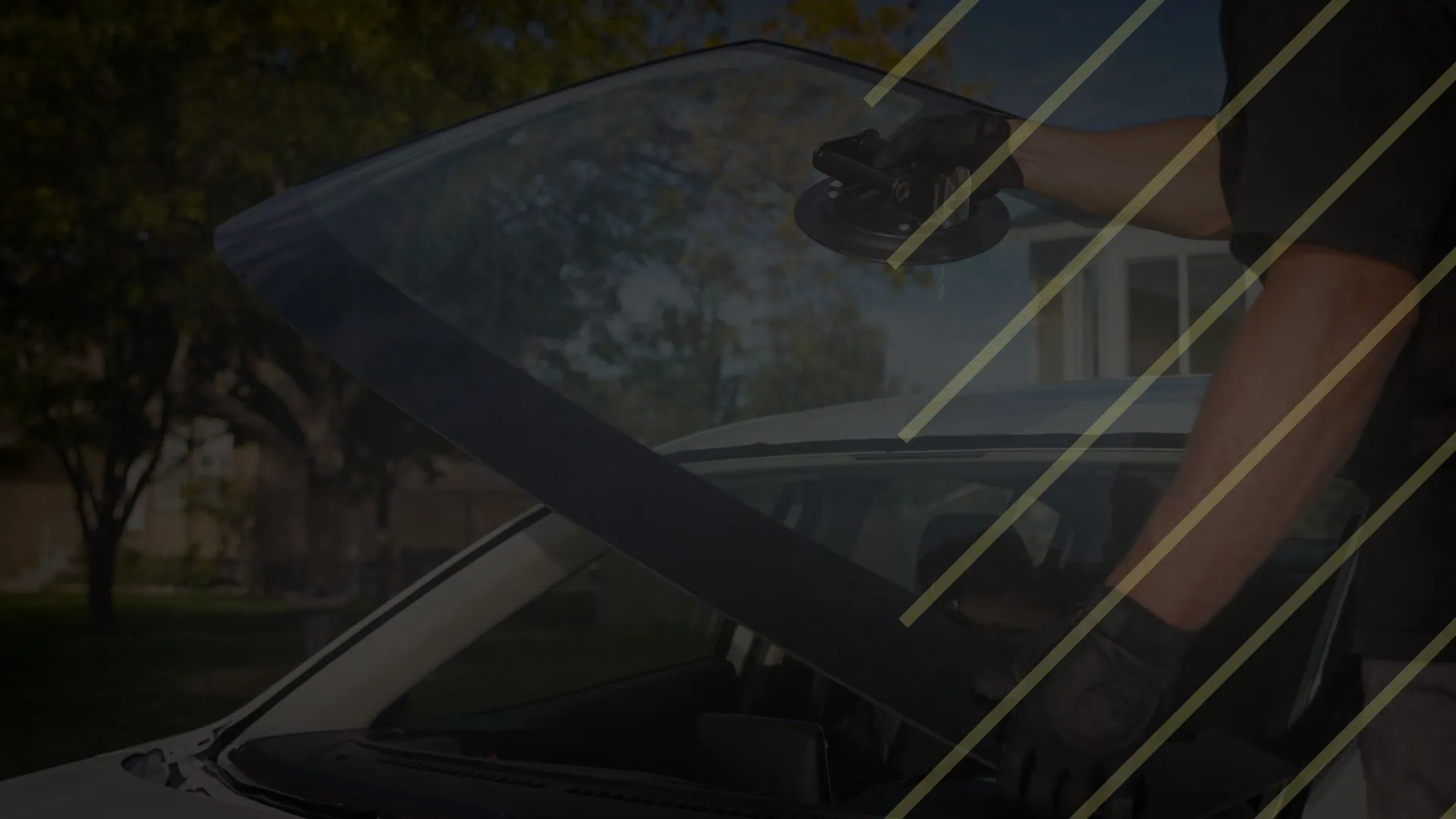
The glass isn’t just sitting there. It’s bonded to the frame with high-strength urethane adhesive, creating a unified structure that distributes crash forces across the entire vehicle. Damage to the glass disrupts that bond and reduces the windshield’s ability to brace the roof, protect occupants, and maintain the integrity of the cabin during a collision.
Here’s something most drivers don’t know: your passenger-side airbag relies on the windshield to work correctly. When the airbag deploys, it doesn’t inflate straight toward the passenger. It shoots upward at 150 to 200 mph, bounces off the windshield, and then redirects toward the occupant.
If your windshield is cracked, it may not withstand that force. A weakened windshield can shatter on impact, causing the airbag to deflate prematurely, deploy at the wrong angle, or fail to cushion the passenger effectively. In a serious crash, that malfunction can be the difference between walking away and sustaining life-threatening injuries.
The problem gets worse if the windshield pops out entirely. Without the glass in place, there’s nothing to redirect the airbag. It inflates into empty space while the passenger’s head and upper body move forward unprotected. This isn’t a hypothetical risk—it’s a documented failure mode that occurs when windshields aren’t properly installed or are structurally compromised by cracks.
Modern vehicles are designed with the assumption that the windshield will remain intact. Engineers build crumple zones, airbag timing, and restraint systems around that assumption. When the windshield fails, the entire safety system is thrown off. You’re not just losing one feature—you’re undermining the coordinated protection your vehicle was built to provide.
Even a small crack reduces the windshield’s bonding strength with the frame. Some studies show that damaged windshields can lose up to 70% of their adhesive integrity, making them far more likely to detach under the pressure of airbag deployment or roof compression. That’s not a minor concern. It’s a fundamental safety issue that affects every occupant in the vehicle.
The short answer: it depends on the size, location, and severity of the damage—but it’s never ideal. A small chip in the corner of the windshield, away from your line of sight and the wiper path, might not pose an immediate danger. But a crack that’s spreading, located in your field of vision, or longer than six inches is a different story.
Visibility is the most obvious issue. Cracks distort your view of the road, especially at night when oncoming headlights catch the edges and create glare. During the day, sunlight bounces off the damage, making it harder to focus on traffic, pedestrians, or changing conditions ahead. Even if you think you can see fine, your brain is working harder to process visual information through the distortion—and that split-second delay can matter in an emergency.
Then there’s the legal side. In New York, it’s illegal to drive with a cracked windshield if the damage impairs your view of the road. The state’s vehicle inspection standards are more specific: your car will fail inspection if you have a crack longer than 11 inches with any part of it in the area cleared by your windshield wipers, or a star crack greater than 3 inches in diameter. If you’re caught driving with damage that obstructs your vision, you can be ticketed under VTL 1213(a) for obstructed view—and those fines add up.
But the bigger risk isn’t the ticket. It’s what happens if you’re in an accident with a compromised windshield. If the glass fails and someone is injured, you could face liability issues. Courts have ruled that failing to repair obvious vehicle defects can satisfy the negligence standard in traffic-related claims. Insurance companies may also reduce payouts or deny claims if they determine that windshield damage contributed to injuries.
Temperature changes make everything worse. When it’s cold, glass contracts. When it’s hot, it expands. A crack that looks stable today can spread across the entire windshield overnight if the temperature drops below freezing. In fact, cracks are 60% more likely to grow when temps hit 32 degrees or below. Once a crack reaches the edge of the windshield, the structural integrity is shot, and you’re looking at a full replacement instead of a simple repair.
If the crack is small—less than the size of a quarter—and it’s not in your direct line of sight, you might be able to get it repaired. Professional resin injection can restore up to 95% of the glass’s original strength and prevent the damage from spreading. But if the crack is longer than six inches, located in the driver’s critical vision area, or extending to the edge of the glass, replacement is the only safe option.
Bottom line: even if you can technically drive with a cracked windshield, you’re gambling with your safety, your legal standing, and your financial liability. The longer you wait, the worse the damage gets, and the more expensive the fix becomes.
Want live answers?
Connect with a First Class Auto Glass expert for fast, friendly support.
New York doesn’t mess around when it comes to windshield safety. The law states that you cannot operate a vehicle with glass that is “broken, fractured, or discolored” in a way that distorts visibility. That’s broad language, and enforcement is left to the discretion of individual officers—which means what passes one day might get you pulled over the next.
The clearer standard comes from the state’s annual vehicle inspection requirements. If your windshield has a crack longer than 11 inches with any part of it in the area cleared by your wipers, your vehicle will fail inspection. Star-shaped cracks 3 inches or larger in diameter will also result in a failure. And if you have multiple cracks or chips within 3 inches of each other, that’s another red flag.
Federal regulations add another layer. You cannot legally drive with a windshield crack or chip larger than 3/4 inch in diameter, two cracks within three inches of each other, intersecting cracks, or any damage directly in the driver’s view. These are minimum standards—your state may have stricter rules on top of them.

Failing inspection isn’t just an inconvenience—it means you can’t legally register your vehicle until the windshield is repaired or replaced. Driving with an expired inspection sticker carries its own penalties, including fines and potential points on your license depending on how long it’s been expired.
If you’re pulled over for an obstructed view violation, the ticket can cost anywhere from $0 to $150, depending on the circumstances and the officer’s judgment. Some drivers are given a grace period to fix the windshield and provide proof of repair, which can result in the ticket being dismissed. Others aren’t so lucky.
The real risk is what happens if you’re involved in an accident while driving with a known windshield defect. If the crack contributed to the accident—say, by obstructing your view of a pedestrian or another vehicle—you could be found partially or fully at fault. New York follows a pure comparative negligence rule, which means you can still recover damages even if you’re 99% at fault, but your compensation is reduced by your percentage of fault. A documented windshield crack can easily be used against you to increase that percentage.
Insurance companies will also scrutinize the condition of your windshield after a crash. If the glass failed during the accident and the failure contributed to injuries, your insurer may argue that you were negligent in maintaining your vehicle. That can lead to reduced payouts, higher premiums, or even denial of coverage in extreme cases.
And here’s the kicker: if your windshield was already cracked before the accident and you didn’t repair it, proving that the damage was pre-existing becomes critical. If you can’t, the insurance company may assume the crack happened during the collision and deny your glass claim entirely. It’s a mess you don’t want to deal with, especially when you’re already dealing with the aftermath of an accident.
The bottom line is simple: New York law gives you some leeway with minor chips, but once the damage crosses into “obstructed view” territory or fails inspection standards, you’re operating outside the law. The fines are one thing. The liability exposure is another. The safety risk is the biggest issue of all.
If your car was built in the last five to seven years, there’s a good chance it has a forward-facing camera mounted behind the rearview mirror. That camera powers features like lane departure warnings, adaptive cruise control, automatic emergency braking, and forward collision alerts. These systems are collectively known as ADAS—Advanced Driver Assistance Systems—and they’ve made driving significantly safer.
But here’s what most people don’t realize: nearly 9 out of 10 model year 2023 vehicles require ADAS recalibration after a windshield replacement. That’s because even a tiny shift in the camera’s position—as little as one degree—can throw off the entire system. The camera might “see” the road incorrectly, causing lane-keeping assist to pull you in the wrong direction or preventing automatic braking from activating when it should.
When your windshield is replaced, the camera and its mounting bracket are removed and reinstalled. Even with perfect installation, small changes in glass thickness, curvature, or bracket alignment can alter what the camera sees. That’s why manufacturers require recalibration as part of the replacement process. It’s not optional. It’s a safety requirement.
There are two types of calibration: static and dynamic. Static calibration is done in a shop with the vehicle stationary. Technicians set up specialized targets at precise distances and angles, and the vehicle’s computer uses those targets to realign the camera. Dynamic calibration involves driving the vehicle on well-marked roads at specific speeds so the system can observe real-world conditions and fine-tune its settings. Some vehicles require both.
Skipping calibration is a gamble. Your lane departure warning might not alert you when you drift. Your automatic braking might not engage when a car stops suddenly in front of you. Your adaptive cruise control might misjudge distances and either tailgate or leave too much space. These aren’t minor glitches—they’re failures of critical safety systems that you’re counting on to prevent accidents.
The cost of ADAS calibration typically ranges from $300 to $600 on top of the windshield replacement itself. That might sound steep, but consider the alternative: a malfunctioning safety system that fails when you need it most. Many insurance policies cover calibration as part of comprehensive glass coverage, so it’s worth checking with your insurer before assuming you’ll pay out of pocket.
Not every shop is equipped to perform ADAS calibration. It requires specialized tools, manufacturer-specific software, and trained technicians who understand the nuances of different vehicle systems. When you’re choosing a windshield replacement provider, make sure they have the capability to calibrate your vehicle’s cameras and sensors. Otherwise, you’re paying for a windshield replacement but leaving with a car that’s less safe than it was before.
If the damage is smaller than a quarter, not in your line of sight, and caught early, a professional repair can restore the glass and prevent the crack from spreading. But if the crack is longer than six inches, located in the driver’s critical vision area, or extending to the edge of the windshield, replacement is the only safe and legal option.
Don’t wait for the damage to get worse. Temperature changes, vibrations, and everyday driving stress can turn a small chip into a spiderweb crack overnight. The longer you delay, the more you’re risking your safety, your legal standing, and your wallet.
If you’re in Suffolk County, NY or Nassau County, NY and need windshield replacement or ADAS calibration, we bring the service to you—at your home, office, or wherever is convenient. With over 20 years of experience, 10,000+ successful services, and a lifetime warranty on every job, you’re getting owner-operated care that larger competitors can’t match.
Article details:
Share:
Continue learning: