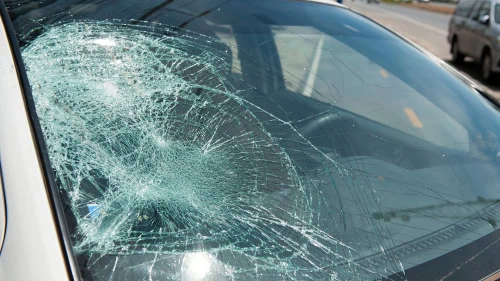
A small windshield crack can spread faster than a rumor in a small town. Discover the warning signs that mean you need a fix now—before your wallet takes a hit.
Share:

Summary:
Most people think a cracked windshield is just a “visual aesthetic” choice. It’s not. Your windshield is a high-tech sandwich: two layers of glass with a plastic “safety ham” in the middle. It’s designed to hold together like a champ, but once that seal is broken, the structural “bread” starts to fail. A damaged windshield can’t handle the pressure—literally. In a collision, it’s supposed to redirect energy away from you, not fold like a lawn chair. And for those of you driving 2018+ models, there’s a high-tech camera sitting behind that rearview mirror. If the glass is even slightly wonky, that camera—which controls your emergency braking—might think a shadow on the road is a brick wall. That’s a “brake check” nobody wants.

Pull out a dollar bill. (If you’ve lived on Long Island long enough, you might still have one.) A single is about six inches long. If your crack is longer than George Washington’s face, you’ve officially exited the “quick fix” zone and entered the “expensive replacement” territory.
Windshield repair is like a medical filling—we inject a special resin to bond the glass back together. But resin isn’t magic. Once a crack stretches beyond six inches, it’s under too much tension from your car’s frame. It’s like trying to hold back a flood with a piece of Scotch tape.
If you’re bouncing over potholes in Hauppauge or hitting those lovely “waves” on the Southern State, a long crack can fail suddenly. Plus, the longer you wait, the more dirt and windshield washer fluid gets stuck inside. Trying to repair a dirty crack is like trying to glue a dusty broken vase—it’s going to look cloudy and fail the second you hit a speed bump.
Location is everything. A chip on the far passenger side is an annoyance; a chip directly in front of the driver is a legal and safety disaster.
New York State inspectors are surprisingly grumpy about this. If you have damage in the area swept by your wipers—especially right where you look to see if you’re about to merge into a bus—it’s an automatic “Fail” on your inspection sticker.
Even if you could fix it, repairs aren’t invisible. They leave a tiny “scar” or distortion. Do you really want to spend your commute to Queens staring through a blurry spot that looks like a permanent bug on the glass? Probably not. If the damage is in your “critical vision area,” we’re going to recommend a replacement. It’s not an upsell; it’s so you don’t accidentally run over a mailbox because of a glare.
Want live answers?
Connect with a First Class Auto Glass expert for fast, friendly support.
Windshield damage has a ticking clock, and temperature is the guy holding the stopwatch. Glass expands when it’s hot and shrinks when it’s cold. When the glass is whole, no big deal. When there’s a crack? That expansion is like a wedge being driven into the wound.
On Long Island, we love our 40-degree temperature swings. You blast the defroster on a frosty morning in Huntington, or you crank the AC after your car’s been baking in the Smith Haven Mall parking lot all July—either way, you’re practically begging that chip to “spider” across the whole dash.
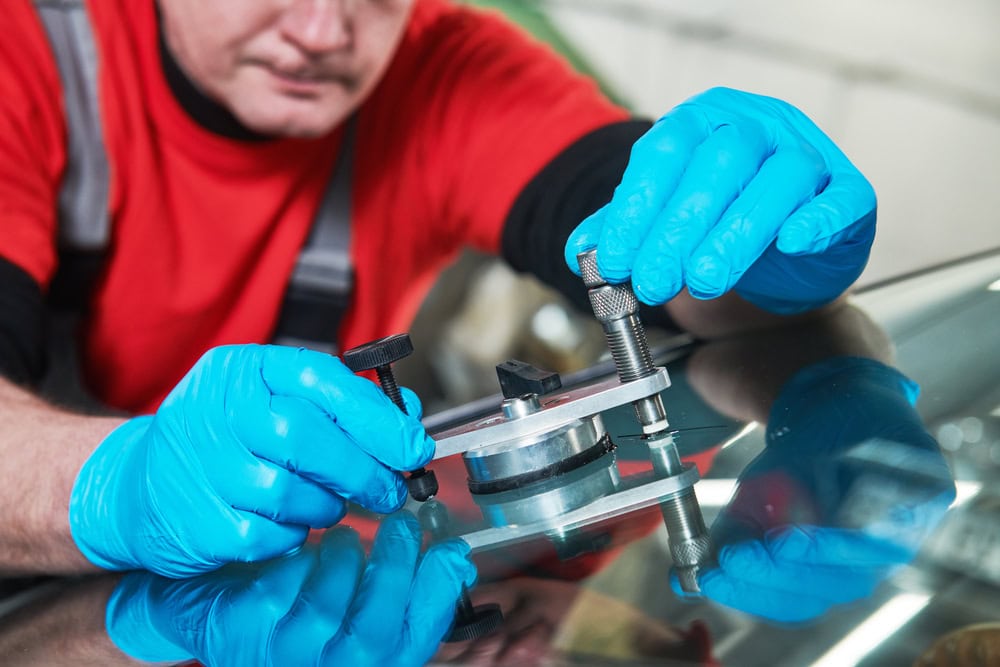
If you’ve been marking the end of the crack with a Sharpie and the crack keeps winning, you’re in trouble. Cracks don’t just “stop” for a coffee break. Once the glass integrity is compromised, every pothole on Sunrise Highway acts like a tiny hammer, pushing the crack an extra millimeter.
Think of it like a run in a pair of stockings—once it starts, it’s going all the way to the top unless you stop it immediately. If you notice the crack is longer today than it was yesterday, stop reading this and call us. You have about 48 hours before that $100 repair turns into a $500 invoice.
If your car has “eyes” (lane assist, collision warning, adaptive cruise control), your windshield isn’t just glass—it’s a precision instrument. These systems are called ADAS (Advanced Driver Assistance Systems).
If we replace that glass, your car’s camera needs a “re-education” session, otherwise known as recalibration. If your shop tells you, “Eh, you don’t need that,” run away. A camera that is off by even one degree can miscalculate a stopping distance by several feet. That’s the difference between a “close call” and an insurance claim. Most newer cars require this by law and manufacturer standards, so make sure your glass pro has the tech to talk to your car’s brain.
The biggest sign you need a repair? You’ve been staring at that chip since the last Mets game. Procrastination is the #1 cause of windshield replacement.
We get it—you’re busy. But we’re mobile. We can come to your office in Melville or your driveway in Bay Shore. Most repairs take 30 minutes. That’s less time than it takes to wait in line at a bagel shop on a Sunday morning. Plus, most Suffolk County insurance policies cover the repair with little or no deductible. That means it’s essentially free. Why wait for it to get expensive?
Article details:
Share:
Continue learning: