Auto Glass FAQs: Everything Long Island Drivers Need to Know
From rogue pebbles on the LIE to the high-tech cameras in your rearview mirror, Long Island drivers face unique glass challenges. Get straight answers to the questions you're too afraid to Google.
Share:
Summary:
Windshield damage happens. Camera calibration sounds like something out of a sci-fi movie. Insurance coverage feels like a maze.
If you’ve been ignoring that chip or wondering if your car’s safety systems are currently hallucinating, you’re not alone. This guide answers the real questions Long Island drivers face—from what your insurance actually covers (spoiler: it’s better than you think) to why that “walnut-sized” camera behind your rearview mirror matters more than your morning bagel order.
Table of contents
You’ve got a crack spreading across your windshield faster than traffic on the Southern State on a Friday afternoon. You know you should get it fixed, but the questions are piling up. Will insurance cover it? Do I really need that “calibration” thing the shop mentioned, or is it just an expensive software update?
Here’s the truth: auto glass repair doesn’t have to be a problem. Most of what you’re wondering comes down to the type of damage, what your high-tech car requires, and what your insurance will actually pay for. Let’s walk through the questions that matter most when you’re dealing with damaged glass on Long Island.
Should I Repair or Replace My Windshield? (The "Quarter" Rule)
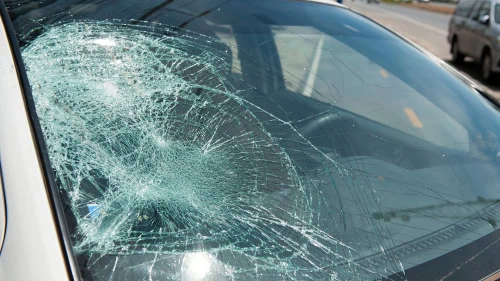
The answer usually boils down to the “Pocket Change Test.” If the chip is smaller than a quarter and the crack is shorter than a dollar bill (about six inches), we can usually save it with a repair. If it’s bigger, or if it looks like a spiderweb is taking over your view, it’s time for a replacement.
Location is the other big factor. If the damage is directly in your line of sight, we usually recommend a replacement. Why? Because even the best repair leaves a tiny “scar,” and nobody wants to spend their commute to Queens squinting through a blurry spot. Also, if the crack is touching the edge of the glass, the structural integrity is toast—time for a new one.
How Much Does This Mess Cost?
In Suffolk and Nassau, a quick chip repair usually runs between $50 and $150. But here is the secret: if you have comprehensive insurance, it usually costs you zero dollars. Insurers would much rather pay us a hundred bucks to fix a chip now than five hundred to replace the whole windshield later.
For a full replacement, the price tag for standard glass is usually $200 to $500. However, if you drive a car built in the last few years, you likely have ADAS (Advanced Driver Assistance Systems). This adds a “calibration” fee that can push the total over $1,000. It’s not a “Midtown Markup”—it’s the cost of making sure your car’s automatic braking system doesn’t think a mailbox is a semi-truck.
What Does Insurance Cover in New York? (The "No-Brainer" Law)
New York is actually one of the best places to have a cracked windshield. Why? Because state law prohibits insurance companies from raising your rates for a comprehensive glass claim. You heard that right. Filing a claim for a rock hitting your windshield on the Northern State won’t hike your premiums.
Even better, if you have comprehensive coverage in NY, you likely have Full Glass Coverage. This means your deductible is waived. You get a brand-new windshield and a professional calibration for $0 out of pocket. It’s basically the only time the words “New York” and “Free” appear in the same sentence.
Want live answers?
Connect with a First Class Auto Glass expert for fast, friendly support.
Do I Really Need ADAS Calibration? (Or Is My Car Just High Maintenance?)
Yes, you really need it. If your car has a camera behind the rearview mirror, it uses that “eye” for lane assist, emergency braking, and adaptive cruise control. When we replace the glass, that camera’s “vision” shifts by a fraction of a millimeter.
That tiny shift might not seem like much, but at 65 mph, it can mean your car thinks the car in front of you is 10 feet further away than it actually is. Calibration is like giving your car a new pair of prescription glasses. Without it, your safety systems are basically guessing.
How Does Calibration Work? (Science!)
EMPTY_FIELD
Wait, How Long Before I Can Drive Away?
The “Safe Drive-Away Time” is usually about one hour after the glass is set. We use high-grade adhesives that cure faster than it takes to get through the line at a busy deli. If we’re doing a calibration, add another hour.
Pro-tip: Don’t take your car to the car wash for at least 24 hours. The high-pressure jets are the natural enemy of fresh adhesive. Also, leave your windows cracked an inch if it’s a hot day to prevent pressure from popping the new seal.
Getting It Fixed Right the First Time
Auto glass repair on Long Island doesn’t have to be a mystery. Most of the time, it’s a quick, convenient process that is fully covered by your insurance. The key is acting fast—before that tiny chip decides to take a trip across your entire dashboard.
Don’t let the “robot eyes” of your car scare you away from a replacement. Calibration is just part of modern car ownership, and we’ve got the tech to handle it right in your driveway.