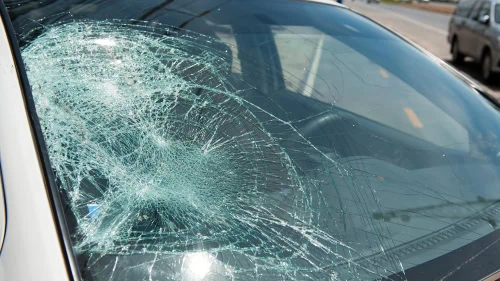
Your windshield replacement is not complete until your ADAS camera is recalibrated. Here is why that step matters more than most drivers realize.
Share:
Summary:
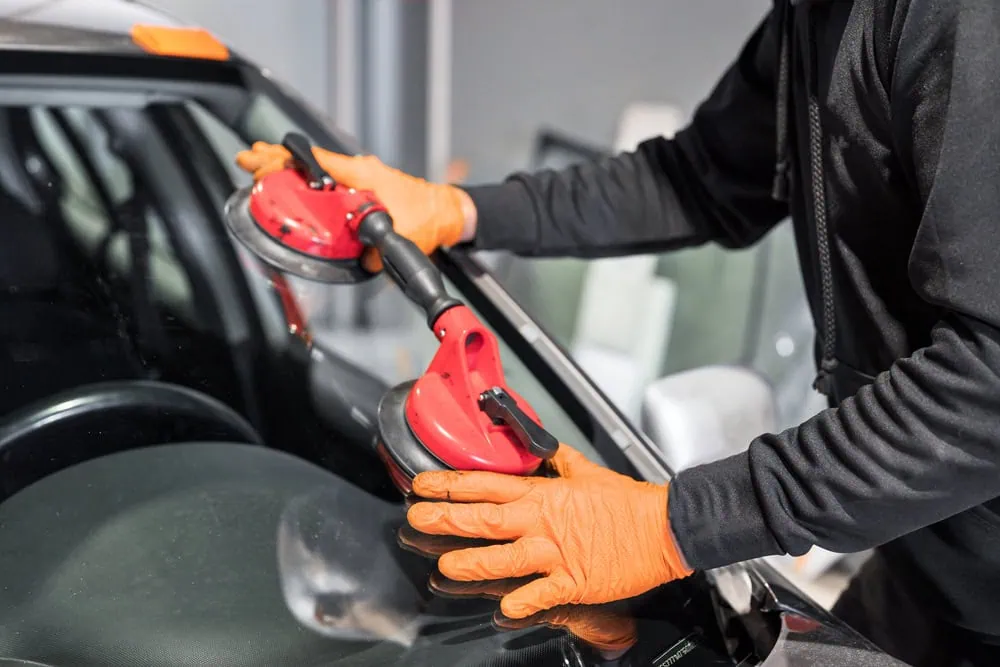
You got your windshield replaced. The glass looks great, the car starts fine, and nothing on the dashboard is flashing. Therefore, you are good, right? Not necessarily. If your vehicle was made in the last several years, a strong chance exists that it features a forward-facing camera mounted near the rearview mirror, and that camera powers some of the most important safety features on your car. When the windshield comes out and a new one goes in, that camera’s alignment shifts, sometimes by just fractions of a millimeter. That minor shift is enough to throw the whole system off. Here is what is happening and why it matters for drivers across Long Island.
ADAS stands for Advanced Driver Assistance Systems. It serves as the umbrella term for the safety technology that has become standard on most new vehicles, such as lane departure warnings, automatic emergency braking, adaptive cruise control, forward collision warnings, and blind spot monitoring. Most of these systems rely on a forward-facing camera mounted directly to or near the windshield.
When your windshield is replaced, that camera must be removed and remounted. Even when the job is done carefully and correctly, the camera’s position relative to the road shifts. These systems are engineered to work within tight tolerances, so even a minor positional change can cause the camera to view the road differently than designed. Recalibration addresses this by resetting the system so it reads the road accurately again.
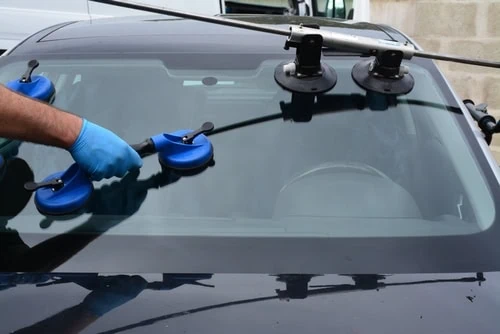
This is the part that catches most drivers off guard. The assumption is simple: if something is wrong with the car, a warning light will turn on. That is how drivers have been trained to think about vehicle problems for decades. However, ADAS technology does not always operate that way.
A miscalibrated camera frequently produces no warning light at all. The system continues to run, but it operates on incorrect data. Your lane departure warning might still chime, and your automatic emergency braking might still feel responsive, making everything seem normal. Nevertheless, the camera feeding those systems information works from a skewed picture of the road, and the gap between what it sees and what is present creates real consequences.
This makes skipping calibration riskier than it feels. No obvious signal tells you something is wrong. You drive away from the windshield replacement feeling fine, and the problem stays invisible until an emergency arises. For drivers spending time on the Long Island Expressway or the Northern State Parkway, where stop-and-go traffic puts ADAS systems to work constantly, that risk is substantial.
The National Safety Council estimates that properly functioning ADAS systems can impact more than 3.5 million crashes per year. Those numbers hold up only when the systems are calibrated correctly. A camera off by a small margin can cause lane departure systems to miss markings, adaptive cruise control to misjudge distances, or emergency braking to react too slowly. None of those failures announce themselves with a dashboard light.
If your vehicle was built in the last few years, a strong chance exists that calibration is required after a windshield replacement as a manufacturer specification rather than an optional add-on. Nearly all major automakers, including Toyota, Honda, Ford, Subaru, and Tesla, require recalibration after windshield replacement to maintain your vehicle’s safety systems. As of the 2023 model year, roughly 89% of vehicles require calibration after windshield replacement, compared to just 25% of 2016 models. The vehicle fleet on Long Island has shifted toward ADAS-equipped vehicles, and the calibration requirement has shifted accordingly.
Not all ADAS calibration is the same, and the type your vehicle needs depends on the make, model, and equipped systems. Two main methods exist: static calibration and dynamic calibration.
Static calibration is performed in a controlled indoor environment. The technician uses specialized calibration targets, which are physical reference points placed at precise distances and angles from the vehicle, along with diagnostic software to reset the camera’s alignment. This method requires a level floor, adequate space, and proper equipment. It cannot be improvised or rushed.
Dynamic calibration functions differently. The technician drives the vehicle at specific speeds on roads with clear lane markings while the system recalibrates in motion. The camera relearns how to read the road by processing real-world data under controlled driving conditions.
Some vehicles require both. Certain Subaru models with EyeSight systems, for instance, need static recalibration first, followed by a dynamic drive to complete the process. The right method depends entirely on your specific vehicle, meaning whoever performs the calibration must understand the difference and possess the necessary equipment.
This explains why not every auto glass shop can perform ADAS calibration. It requires manufacturer-specific calibration targets, scan tools, diagnostic software, and trained technicians who understand these systems. A shop that replaces windshields but subcontracts the calibration, or skips it entirely, leaves the job incomplete. For Suffolk County and Nassau County drivers with newer vehicles, particularly in communities like Syosset, Great Neck, Garden City, or Manhasset where luxury and late-model vehicles are common, confirming upfront that the shop handles calibration in-house is worthwhile.
Want live answers?
Connect with a First Class Auto Glass expert for fast, friendly support.
This is a frequent question, and the short answer for most Long Island drivers is yes, it is often covered. New York State allows separate glass coverage options that can reduce or eliminate your deductible for windshield replacement. In many cases, comprehensive insurance policies cover both the windshield replacement and the ADAS calibration as part of the same claim.
Coverage varies by policy, so confirming with your insurer before work begins is recommended. We handle insurance paperwork directly, meaning if you remain unsure about your policy coverage, we can help you work through it rather than leaving you to figure it out alone.
Beyond the safety concerns, a practical risk involves what happens to your insurance claim if an accident occurs and your ADAS systems were not properly calibrated after a windshield replacement.
Insurance companies increasingly scrutinize ADAS calibration records following accidents. If it emerges that your windshield was replaced without camera recalibration, you could face coverage complications. This scenario is easy to avoid simply by completing the calibration when the glass is replaced.
More immediate consequences also exist. A miscalibrated ADAS system can produce diagnostic trouble codes, trigger warning lights, cause steering wheel vibration, create a pull in the vehicle’s steering, or increase steering effort. These are documented outcomes of faulty sensor input that can appear at any time. Driving the Sunrise Highway or the Southern State Parkway with a lane departure system reading the road incorrectly presents a real safety gap.
The most dangerous scenario involves no symptoms appearing at all. The camera is off, the system feeds bad data to your safety features, and everything feels normal with no lights or vibrations to indicate a problem. That silent failure proves the hardest to catch and the easiest to dismiss.
We operate as a mobile, owner-operated auto glass service covering Suffolk County, Nassau County, and Queens. We come directly to your driveway, workplace, or preferred location, handling the windshield replacement and ADAS calibration as a single job rather than requiring separate appointments with different vendors.
Operating since 2016, our owner brings over two decades of hands-on industry experience to every job, backed by more than 10,000 successful services across Long Island and the boroughs. We hold Dinitrol certification and recognition as a New York State certified mobile repair shop, using top-quality, brand-new glass meeting or exceeding OEM specifications to prevent optical interference with camera performance.
Our calibration covers all major ADAS components, including forward-facing cameras, lane departure systems, adaptive cruise control, automatic emergency braking, and blind spot monitoring across domestic and imported makes. Every windshield job includes a complete lifetime guarantee for as long as you own the vehicle.
For Suffolk County drivers in Hauppauge, Port Jefferson, or Smithtown, and Nassau County drivers in Garden City, Manhasset, or Hicksville, mobile service ensures your car stays put while your day keeps moving. When you call us, you speak directly with the people performing the work rather than a call center or dispatcher.
We manage insurance paperwork directly. If your comprehensive policy covers replacement and calibration, which it often does for New York drivers, we coordinate with your insurer so you avoid navigating the process alone.
If your vehicle features a forward-facing camera, windshield replacement and ADAS recalibration go hand in hand. One without the other leaves the job unfinished, even when everything looks and feels fine afterward.
For most Long Island drivers, this process remains straightforward and affordable thanks to New York’s glass coverage options and convenient mobile service. Working with a team handling both the glass and calibration in-house eliminates the need to chase down a second appointment.
If you recently had your windshield replaced and remain uncertain if calibration was done, or if you plan to schedule a replacement and want it handled correctly, reach out to First Class Auto Glass for a direct answer and reliable service.
Article details:
Share:
Continue learning: