
Got something on your windshield and not sure what it is? Here's how to tell the difference — and what to do next.
Share:
Summary:
You’re warming up the car, or maybe running it through a wash, and you notice something on the windshield you hadn’t seen before. Could be a small pit. Could be a line that seems to be getting longer. Either way, you’re not sure what you’re looking at — and you definitely don’t know if it needs to be fixed today or if it can wait.
That uncertainty is exactly where most Long Island drivers get stuck. This page is here to clear it up. We’ll walk you through how to identify what you actually have, what it means for your repair options, and why — for most people across Nassau and Suffolk County — the answer to “how much will this cost me?” is probably nothing.
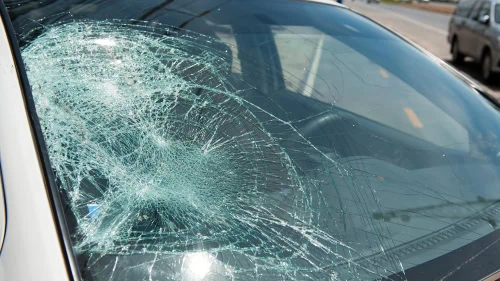
The simplest way to think about it: a chip is missing glass, and a crack is a line through the glass. When something hits your windshield — a piece of gravel off a truck on the LIE, a stone kicked up by the car ahead of you — it can either knock out a small fragment of the outer layer or send a fracture line across the surface. Sometimes both happen at once.
Chips tend to look like a small pit, a dark dot, or a starburst pattern radiating from a central point. Cracks look like a line — sometimes short, sometimes running several inches across the glass. The distinction matters because they’re assessed differently, repaired differently, and in some cases, one requires replacement where the other doesn’t.
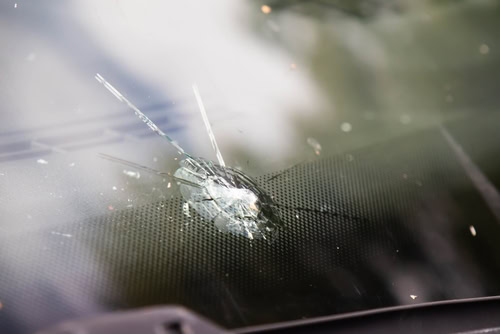
Drivers use a lot of different words for the same thing. Ding, chip, pit, rock chip, stone chip — these terms get used interchangeably, and that’s fine. In practice, they’re all describing a small area where the outer layer of the windshield took an impact and lost some glass.
What matters more than the name is the shape of the damage, because shape tells you how the glass broke and how well it’ll respond to repair. A bullseye chip looks like a dark circle — a cone-shaped void in the outer layer with a round impact pattern. It’s one of the more straightforward repairs. A star chip has short cracks radiating outward from the impact point, like a starburst. Still repairable in most cases, as long as it hasn’t spread too far.
A half-moon is a partial bullseye — same general idea, just an uneven impact pattern that makes the repair slightly more involved. Then there’s the combination break, which is a star chip inside a bullseye. These are trickier, especially if they’re sitting right in your primary line of sight — directly in front of your eyes while driving. Even a technically successful repair leaves some optical distortion, which is why damage in that zone sometimes warrants replacement even when the size would normally allow for repair.
The good news: most chips, regardless of what you call them, are repairable if you catch them before they spread. Professional repair has roughly a 70% success rate compared to about 40% for DIY kits — a gap large enough to matter. On Long Island, where temperature swings between a cold night and a heated car interior can turn a dormant chip into a full crack by morning, catching it early is the whole game.
Stone chip repair is probably the most common service we handle across Suffolk and Nassau County. Long Island’s road conditions make it almost inevitable — heavy truck traffic on major highways, road salt and sand laid down through winter, and summer construction zones all generate the kind of debris that chips windshields.
A stone chip happens when a small piece of road debris — gravel, a pebble, a fragment of asphalt — strikes the windshield at speed. The impact knocks out a small piece of the outer glass layer, leaving a pit or void. At first, it might look minor. And it often is, structurally speaking. The problem is what happens next.
That small void creates a stress point in the glass. Temperature changes put pressure on it. The cold contraction of a January night after a warm afternoon can be enough to send a crack running from that chip across several inches of glass. Road vibration does the same thing over time. A chip that’s been sitting there since October has a much higher chance of cracking by February than one you get repaired the same week it appears.
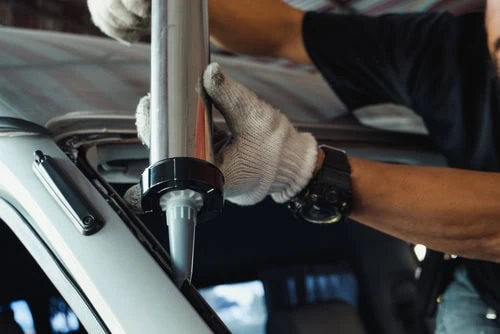
The repair process itself is straightforward. A technician injects professional-grade resin into the void, uses UV light to cure it, and polishes the surface. Done properly, it stabilizes the glass, prevents spreading, and restores most of the optical clarity. It takes about 30 to 45 minutes on-site. For most Long Island drivers with comprehensive insurance, it costs nothing out of pocket.
What stone chip repair cannot do is make the glass look exactly as it did before. There’s usually some trace of where the chip was. That’s normal and honest, and any shop that promises a perfectly invisible result is overselling. What repair does do — reliably, when handled by someone who knows what they’re doing — is stop the damage from becoming something much worse and much more expensive.
Want live answers?
Connect with a First Class Auto Glass expert for fast, friendly support.
Not every crack is repairable, and not every shop will tell you that upfront. The general threshold is around six inches — cracks longer than that typically require a full windshield replacement rather than a repair. Edge cracks, meaning cracks that start within about two inches of the windshield’s border, also tend to require replacement. The glass edge is under more stress than the center, and edge cracks spread faster and more unpredictably.
The other factor is location. A crack sitting directly in your line of sight — the zone right in front of your eyes while you’re driving — creates a visibility problem that repair can’t fully resolve. Even a clean resin fill leaves some distortion. In that case, replacement is the right call, regardless of the crack’s length.
If your vehicle has lane departure warnings, automatic emergency braking, adaptive cruise control, or rain-sensing wipers, it almost certainly has a front-facing camera mounted near the top of the windshield. That camera is part of your car’s Advanced Driver Assistance Systems — ADAS — and it needs to be recalibrated any time the windshield is replaced.
This is where a lot of drivers get surprised. They schedule a windshield replacement, the glass goes in, and then they’re told they need to go to a dealership or a separate calibration facility to get the camera realigned. That’s an extra trip, extra time, and sometimes extra cost — depending on what their insurance covers.
We handle ADAS calibration on-site, as part of the same appointment. No second trip, no dealership visit. For Long Island drivers with newer vehicles — and there are a lot of them across Nassau and Suffolk County — this matters more than it used to. A windshield replacement that doesn’t include proper ADAS recalibration leaves your safety systems operating on incorrect reference points. Lane-keeping assist that’s slightly off. Automatic braking that triggers at the wrong distance. These aren’t cosmetic issues.
A properly installed windshield, calibrated to manufacturer specifications, is part of how the car is supposed to work. Your windshield contributes up to 30% of your vehicle’s structural strength in a crash. It supports the roof in a rollover, helps the airbags deploy at the right angle, and keeps occupants inside the car. That’s why installation quality and recalibration actually matter.
This is the question that keeps more Long Island drivers from acting than anything else. They see the chip, they know they should probably fix it, and then they talk themselves out of calling because they assume it’ll cost money they don’t want to spend, or that filing a claim will come back to bite them at renewal.
Here’s what’s actually true. New York State requires insurance companies to offer zero-deductible glass coverage as an add-on to comprehensive policies. If you have that coverage — and many Long Island drivers do without realizing it — your windshield chip repair is typically covered at no out-of-pocket cost to you. Not reduced. Zero.
As for rates: comprehensive glass claims in New York are generally not treated as at-fault incidents. Filing a claim for a rock chip doesn’t put points on your license or trigger a premium increase the way an accident would. In fact, many insurers actively prefer to pay for a chip repair rather than wait for it to become a full replacement claim — because repair costs them far less. Some will waive the deductible for chip repairs specifically, even when the full glass coverage rider isn’t in place.
We handle the entire insurance process — the paperwork, the billing, the coordination with your insurer. You make one call. We take it from there. For most of our customers across Suffolk and Nassau County, the repair happens the same day or the next day, at their home or office, and they pay nothing. The most common reaction we get is some version of “I didn’t know it was that easy.” It usually is.
If you’re not sure whether your policy includes glass coverage, call your insurer and ask specifically about the New York Full Glass coverage option. It takes two minutes and could save you from a much larger expense down the road.
The short version: if you have a chip smaller than a quarter, or a crack that a dollar bill can fully cover, it’s likely repairable — and on Long Island, likely free under your insurance. If it’s longer than six inches, starts at the edge, or sits in your direct line of sight, replacement is probably the right call. Either way, waiting makes it worse.
Long Island winters are hard on windshield glass. Temperature swings, road salt, and highway debris turn small, manageable chips into cracks that require full replacements. The repair window closes faster than most people expect.
If you’re not sure what you have, that’s exactly what we’re here to figure out. First Class Auto Glass serves Suffolk and Nassau County with same-day mobile service — we come to you, assess the damage honestly, and handle everything from there, including the insurance claim if you have coverage. Reach out and we’ll take a look.
Article details:
Share:
Continue learning: