Your car's safety systems need precise calibration after windshield replacement to protect you when it matters most.
Share:

Summary:
ADAS calibration is the precision process that aligns your vehicle’s cameras, sensors, and radar systems back to factory specifications after windshield replacement or collision repair. Your forward-facing camera, blind spot monitors, and parking sensors all rely on exact positioning to detect threats and respond appropriately.
When your windshield gets replaced, even the most careful installation can shift these components by tiny amounts. What seems insignificant to the human eye becomes a major problem for systems designed to react in split seconds. Your automatic emergency braking might engage too late, or your lane departure warning could miss when you’re drifting into traffic.
This isn’t just about dashboard warning lights or system errors. It’s about whether your safety features will perform when a child runs into the street or when you’re approaching stopped traffic faster than expected.

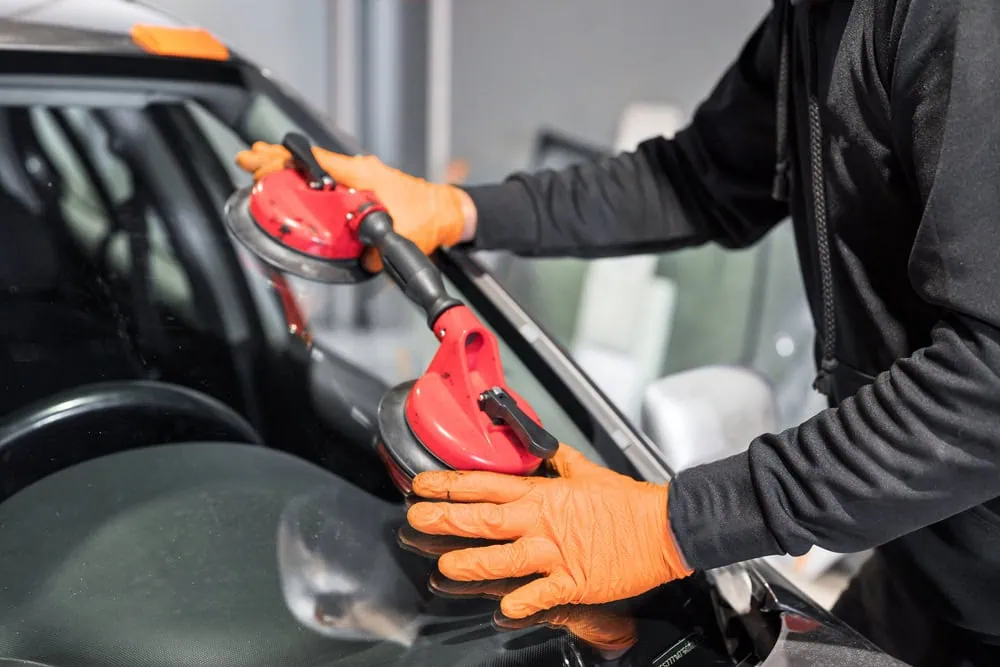
Modern vehicles rely on camera-based ADAS systems that must maintain precise alignment to function correctly. When your windshield is removed and reinstalled, the forward-facing camera mounted behind it can shift by amounts that seem negligible but create serious safety gaps.
Consider how your automatic emergency braking system works. It uses the forward camera to judge distances and closing speeds with other vehicles. If that camera is off by just a few millimeters, the system might calculate that you have more stopping distance than you actually do. Instead of engaging the brakes when you’re 50 feet from impact, it might wait until you’re 30 feet away—potentially the difference between avoiding an accident and experiencing one.
Your lane departure warning faces similar challenges. The system reads road markings through the camera to determine your position within the lane. Misalignment can cause the system to think you’re centered when you’re actually drifting toward the shoulder or into oncoming traffic. It might not warn you until you’ve already crossed the line, defeating the entire purpose of the safety feature.
Adaptive cruise control presents another critical concern. This system maintains safe following distances by constantly measuring the gap between your vehicle and the car ahead. Camera misalignment can cause it to follow too closely or maintain excessive distances, creating dangerous situations for you and other drivers. The system might not detect slower-moving vehicles soon enough or could brake unnecessarily, causing rear-end collisions.
Nassau County drivers deal with particularly challenging conditions that make properly calibrated ADAS systems essential. Heavy traffic on the Long Island Expressway, frequent construction zones, and busy intersections throughout Hempstead and Garden City demand safety systems that respond with precision. When these systems aren’t calibrated correctly, you lose the protection you paid for when you bought your vehicle.
Insurance companies have become increasingly aware of ADAS calibration requirements, and many now require documentation that these systems were properly recalibrated after windshield replacement or collision repair. This isn’t just a formality—it’s become a coverage issue that could affect your claim if an accident occurs.
When you file a claim involving your vehicle’s safety systems, insurance adjusters now routinely investigate whether those systems were functioning correctly at the time of the incident. If they discover that required calibration wasn’t performed after recent windshield work, they may question whether the safety system failure contributed to the accident. This could potentially impact coverage decisions or claim payouts.
The legal implications extend beyond insurance coverage. If your improperly calibrated safety systems fail to prevent an accident that injures other people, you could face liability questions about whether you maintained your vehicle’s safety equipment according to manufacturer requirements. Courts are beginning to recognize that vehicle owners have a responsibility to ensure their safety systems function as designed.
Suffolk County’s busy roadways, including the Southern State Parkway and Sunrise Highway, see thousands of vehicles daily relying on ADAS features to prevent accidents. When these systems aren’t calibrated correctly, they create risks not just for the vehicle owner but for everyone sharing the road. Insurance companies understand this broader liability picture and are adjusting their requirements accordingly.
Professional calibration documentation provides legal protection by demonstrating that you took appropriate steps to maintain your vehicle’s safety systems. This documentation typically includes details about which systems were calibrated, what procedures were followed, and confirmation that all systems passed their diagnostic tests. Insurance companies accept this documentation as proof that safety systems were properly maintained according to manufacturer specifications.
The cost of proper calibration is minimal compared to the potential financial and legal consequences of driving with compromised safety systems. Most comprehensive insurance policies cover ADAS calibration costs when performed as part of covered windshield replacement, making it essentially free for most drivers to ensure their safety systems work correctly.
Want live answers?
Connect with a First Class Auto Glass expert for fast, friendly support.
Traditional ADAS calibration requires bringing your vehicle to a specialized facility and waiting while technicians perform the work. This creates scheduling challenges and vehicle downtime that busy Nassau and Suffolk County residents don’t need. Mobile calibration brings the same precision equipment and certified expertise directly to your location.
Our mobile units carry manufacturer-approved calibration tools, diagnostic equipment, and precision targets needed for both static and dynamic calibration procedures. Whether you’re at home, work, or another convenient location, we set up the necessary equipment and complete the calibration process without requiring you to travel or wait at a service center.
The convenience factor matters, but the technical capability remains identical to facility-based calibration. We follow the same OEM procedures and use the same precision standards required by vehicle manufacturers and insurance companies.

ADAS calibration involves two primary methods: static calibration performed with precision targets and controlled measurements, and dynamic calibration that requires test driving at specific speeds on marked roads. Your vehicle’s make, model, and specific safety systems determine which calibration type is required.
Static calibration takes place with your vehicle stationary while we use precision laser alignment tools and optical targets positioned at exact distances and angles specified by the manufacturer. This method works well for forward-facing cameras, parking sensors, and many radar-based systems. The controlled environment ensures consistent results regardless of weather conditions or road surface variations.
Dynamic calibration involves driving your vehicle at predetermined speeds on clearly marked roads while connected diagnostic equipment guides the calibration process in real-time. This method allows the safety systems to learn road conditions and lane markings under actual driving conditions. Some vehicles require dynamic calibration to complete the learning process for adaptive cruise control and lane-keeping assistance systems.
Many newer vehicles require both static and dynamic calibration to fully restore safety system functionality. We determine your vehicle’s specific requirements using manufacturer databases and perform whichever calibration methods your safety systems need. The entire process typically takes 45 minutes to one hour, depending on your vehicle’s complexity and calibration requirements.
Nassau County’s diverse driving environments, from suburban residential areas to major highways, benefit from properly calibrated systems that can handle varying road conditions. Whether you’re navigating school zones in Massapequa or merging onto busy expressways, your safety systems need to respond appropriately to the specific challenges of Long Island driving.
Our mobile service eliminates the guesswork about calibration requirements. We bring vehicle-specific information and equipment needed for your exact make and model, ensuring that all safety systems receive the calibration procedures specified by the manufacturer.
Large corporate auto glass chains often treat ADAS calibration as an add-on service, delegating the work to subcontractors or technicians with limited specialized training. When your safety systems are involved, you need technicians who understand the critical nature of precise calibration and take personal responsibility for getting it right.
As an owner-operated business serving Nassau and Suffolk County since 2016, we’ve built our reputation on the quality of our calibration work. Every calibration receives personal attention from experienced professionals who understand that your family’s safety depends on getting these systems right the first time. We don’t rush through procedures or cut corners to meet corporate productivity targets.
Our technicians stay current with evolving ADAS technologies and manufacturer requirements through ongoing training and certification programs. Vehicle safety systems become more sophisticated each year, and proper calibration requires understanding the specific requirements for different makes and models. This expertise comes from focused specialization, not from trying to handle every type of automotive service.
The difference becomes apparent when problems arise or when you have questions about your calibration work. Instead of dealing with call centers or service managers who weren’t involved in your calibration, you work directly with the technicians who performed the work. This direct accountability ensures that any issues get resolved quickly and correctly.
Our lifetime warranty on calibration work reflects our confidence in our procedures and our commitment to your ongoing safety. Large chains often provide limited warranties or require you to return to the original service location for warranty work. Our warranty follows you wherever you are in Nassau or Suffolk County, and we stand behind our work for as long as you own your vehicle.
Over 10,000 successful calibrations have taught us that attention to detail matters when safety systems are involved. We take the time necessary to ensure that every system functions correctly and provide documentation that satisfies insurance requirements and gives you confidence in your vehicle’s safety capabilities.
Your vehicle’s safety systems represent a significant investment in protection for you and your family. After windshield replacement or collision repair, proper calibration ensures that investment continues working when you need it most. The convenience of mobile service means you don’t have to disrupt your schedule or arrange transportation to get this essential service completed.
Professional calibration provides peace of mind that your automatic emergency braking, lane departure warnings, and other safety features will respond correctly in critical situations. With proper documentation for insurance purposes and a lifetime warranty on our work, you can drive with confidence knowing your safety systems meet manufacturer specifications.
Don’t let improperly calibrated safety systems put your family at risk. Contact First Class Auto Glass for mobile ADAS calibration service that brings certified expertise directly to your Nassau or Suffolk County location.
Article details:
Share:
Continue learning: