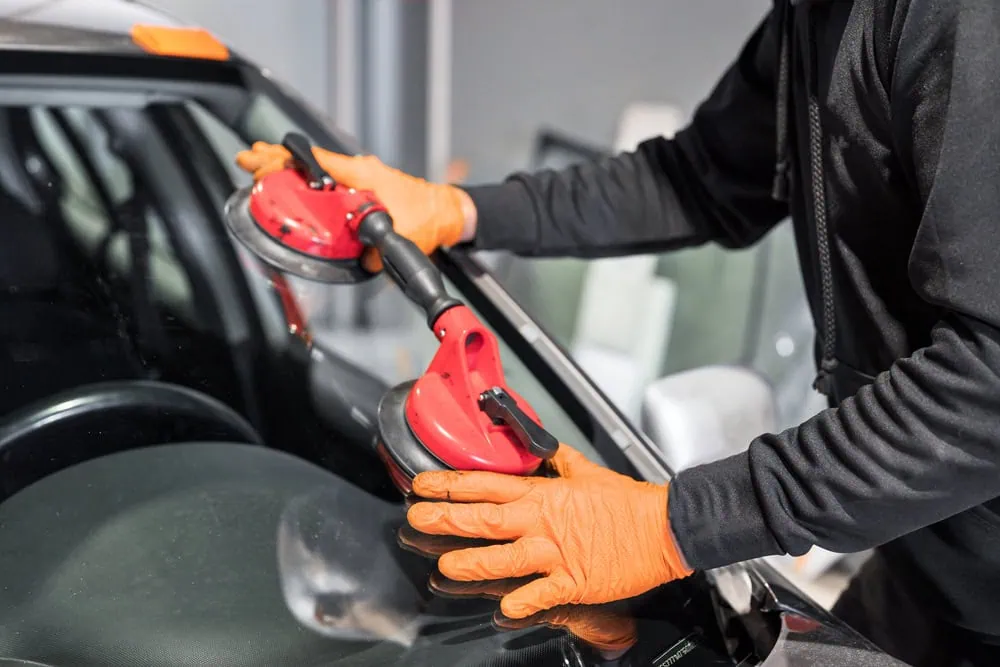
If you drive the LIE or Sunrise Highway regularly, a rock chip is not bad luck, as it is practically a rite of passage. Here is what to do about it.
Share:

Summary:
If you drive the Long Island Expressway or Sunrise Highway on a regular basis, you already know the feeling. You are on your morning commute, traffic is moving at a reasonable clip, a truck passes you, and then that sharp crack strikes against the glass. You check at the next red light and sure enough, there it is. A chip. It is not huge, but it is not nothing either.
It is one of those things Long Island drivers accept as part of the deal. However, there is more you can do than just shrug and hope it does not spread. This guide covers why Long Island roads are so hard on windshields, how to reduce your exposure, and what to do the moment damage appears before it turns into a much bigger problem.
It is not your imagination, nor is it bad luck. The LIE and Sunrise Highway create conditions that are rough on windshields for specific reasons.
The Long Island Expressway runs roughly 70 miles from the Queens-Midtown Tunnel out to Riverhead, and some stretch of it is almost always under construction or resurfacing. Loose gravel, displaced asphalt, and road debris get picked up by tires and thrown at highway speed into the vehicles behind them. At 65 miles per hour, even a small piece of gravel hits with enough force to crack glass. Add in the sheer volume of commercial trucks using the LIE daily, and you have a corridor built for windshield damage.
Sunrise Highway presents a similar problem. It is a high-traffic South Shore arterial running through Nassau County communities like Valley Stream, Rockville Centre, and Freeport before continuing through Babylon, Bay Shore, and Islip into Suffolk County. Heavy truck traffic, ongoing road maintenance, and stop-and-go conditions contribute to the same pattern of debris and damage.

Construction on the LIE is a year-round reality that Long Island drivers know well. When road crews resurface or repair sections of the highway, loose aggregate gets left on the travel surface. Trucks roll over it, tires fling it, and the vehicles in surrounding lanes absorb the impact. You can be driving perfectly, maintaining the correct speed and following distance, and still take a chip from a piece of gravel airborne before you even saw it.
The problem compounds in late winter and early spring. New York’s DOT applies road salt and sand across Nassau and Suffolk County highways throughout the winter months. As temperatures rise, that accumulated debris loosens from the road surface and becomes projectile material for passing traffic. The weeks between late February and April produce a noticeable spike in chip incidents for Long Island commuters every year.
A speed-and-distance dynamic also plays a role. The faster you travel and the closer you are to the vehicle in front of you, the more force any debris carries when it reaches your windshield. On a highway like the LIE where traffic bunches up around construction zones, drivers naturally close the gap, which increases the risk. Keeping a larger following distance than feels necessary, especially behind commercial trucks or open-bed vehicles, is one of the most effective preventive steps. It does not eliminate the risk, but it reduces it meaningfully.
Another factor involves the Hamptons and East End traffic surge. Every summer, vehicle density on the LIE and Sunrise Highway increases substantially as drivers head east toward Southampton, East Hampton, and Montauk. More vehicles means more tire contact with road debris, resulting in more debris in the air. Summer weekends on these corridors present higher risks than an average Tuesday in March.
This is a detail most Long Island drivers discover too late. A chip that looks stable in October can crack across your entire windshield by January due to simple physics rather than bad luck.
When water seeps into a windshield chip and the temperature drops below freezing, that water expands. The pressure from that expansion pushes against the edges of the existing damage. One freeze-thaw cycle might cause minimal harm, but Long Island winters produce multiple cycles where temperatures swing above and below 32 degrees Fahrenheit multiple times in a single week during December, January, and February. Each cycle stresses the glass further. A chip measuring a quarter-inch wide in the fall can become a crack running halfway across the windshield by mid-winter, seemingly overnight.
The practical implication is straightforward: a chip noticed in the fall is not something to put off until spring. If the damage is small enough to repair, generally meaning chips smaller than a quarter and cracks under six inches outside your direct line of sight, the window for an inexpensive fix closes faster than most realize. Waiting a few weeks into winter can turn a repair into a full replacement.
Most comprehensive auto insurance policies in New York cover windshield repair with no deductible. New York is not a zero-deductible state for windshield replacement the way Florida or Kentucky are, meaning a full replacement typically involves your standard deductible. However, for a repair, which represents a smaller claim, many insurers waive the deductible entirely because paying for a repair now is far cheaper than funding a replacement later. Acting fast on a chip often costs you nothing out of pocket, while ignoring it until it spreads costs significantly more.
Want live answers?
Connect with a First Class Auto Glass expert for fast, friendly support.
The moment you notice a chip, the clock starts running. You do not need to pull over immediately, but addressing it sooner improves your options.
First, determine if the damage is repairable or past that point. A chip smaller than a quarter, a crack shorter than six inches, and damage positioned outside your direct sightline can typically be repaired. Anything larger, longer, or sitting in your primary field of vision usually requires a full replacement. If you remain unsure, a quick call to a qualified auto glass technician provides an answer in under a minute.
You should avoid reaching for a DIY kit to fix it yourself. Professional windshield repair maintains a success rate of roughly 70%, while DIY kits run closer to 40%. A failed DIY attempt leaves you with the original chip and can contaminate the damage zone in a way that prevents professional repair, turning a fixable problem into a mandatory replacement.

This is a common question from Long Island drivers, and the answer is generally favorable for repairs.
If you carry comprehensive coverage on your vehicle, windshield repair is typically covered. Furthermore, many insurers in New York voluntarily waive the deductible specifically for repairs. The logic remains simple: a repair costs the insurer far less than a replacement, so paying for a repair now prevents a larger claim later. If you have a repairable chip right now, there is a good chance fixing it costs you nothing.
Windshield replacement differs because New York does not mandate zero-deductible glass coverage. If your windshield needs replacement, you generally pay your standard comprehensive deductible. Evaluating whether filing a claim makes sense depends on your deductible amount and the replacement cost, which is worth discussing with your insurer beforehand.
Your insurance company may suggest a specific shop when you file a glass claim, a practice known as insurance steering. However, you are not required to use their preferred shop, as you hold the legal right to choose your own auto glass provider in New York. Preferred shop arrangements often reflect cost-cutting deals between the insurer and the shop rather than a guarantee of superior service. If you trust a specific provider, you can inform your insurer and proceed accordingly.
At First Class Auto Glass, we handle the insurance paperwork and billing directly with your insurer, eliminating the need to navigate the claim process alone. Having completed this thousands of times across Nassau and Suffolk County, we ensure the repair process for customers with comprehensive coverage is straightforward and costs nothing out of pocket.
If your vehicle was manufactured around 2018 or later, a strong chance exists that it features a front-facing camera mounted near the rearview mirror. That camera powers features like lane departure warnings, forward collision warnings, automatic emergency braking, and adaptive cruise control, which are systems drivers rely on daily.
If your windshield gets replaced, that camera requires recalibration. Because it mounts to the glass rather than the vehicle frame, a new windshield alters its position and angle, often by fractions of a millimeter that camera software reads as significant misalignment. An uncalibrated camera following a windshield replacement may fail to detect a vehicle in your lane, trigger false warnings, or remain unresponsive when needed. These failures present unacceptable risks when driving the LIE at 65 miles per hour.
Not every auto glass shop is equipped to handle this correctly. ADAS calibration requires specific diagnostic equipment, manufacturer-specific calibration targets, and the technical knowledge to execute the process accurately for different vehicle makes and models. A shop replacing the glass while skipping calibration, or performing it with generic equipment, leaves your safety systems compromised.
We maintain specific certification for ADAS calibration work, along with the latest diagnostic equipment and manufacturer-required calibration targets. This core service addresses the reality that most clients drive newer vehicles equipped with these systems. For comprehensive claims, major insurers typically cover ADAS calibration as part of the overall glass claim, meaning you should not pay extra or wonder if the job was done correctly.
If you drive a newer vehicle and need a windshield replacement anywhere in Nassau or Suffolk County, verifying your shop’s ADAS calibration certification is essential. It is the detail most drivers forget to ask about, yet it dictates how your car behaves on the road after the service.
If you drive the LIE or Sunrise Highway regularly, encountering a rock chip is a matter of when rather than if. Construction activity, commercial truck traffic, freeze-thaw cycles, and high vehicle volume on these corridors all contribute to the risk. Understanding the situation and acting quickly when damage appears provides the best defense.
A chip caught early usually results in a quick, low-cost fix likely covered by your insurance. A chip ignored through a Long Island winter can turn into a full replacement. For newer vehicles, calibrating safety systems after glass work determines whether your car’s features operate as intended.
First Class Auto Glass serves Nassau and Suffolk County as a mobile, owner-operated service, coming directly to your home, office, or parked vehicle. Every job comes backed by a lifetime warranty, and we handle the insurance paperwork directly so you do not have to. If you have a chip you have delayed fixing, now is the time to reach out.
Article details:
Share:
Continue learning: