Your car's safety cameras need precise calibration after windshield work. Here's when calibration is required and what happens if you skip it.
Share:

Summary:
ADAS front camera calibration is the process of precisely aligning your vehicle’s forward-facing camera after windshield replacement or repair. Your car’s camera sits behind the windshield and monitors the road ahead to power safety features like lane departure warnings, automatic emergency braking, and adaptive cruise control.
When we remove your windshield, even small changes in the camera’s position can throw off these systems. Calibration ensures the camera “sees” the road correctly again. Without proper alignment, your safety features might activate at the wrong times or fail to work when you need them most.
Your windshield isn’t just glass—it’s a critical component of your vehicle’s safety system. The front camera mounts directly to the windshield or the area immediately behind it, creating a precise viewing angle that’s been programmed for your specific vehicle.
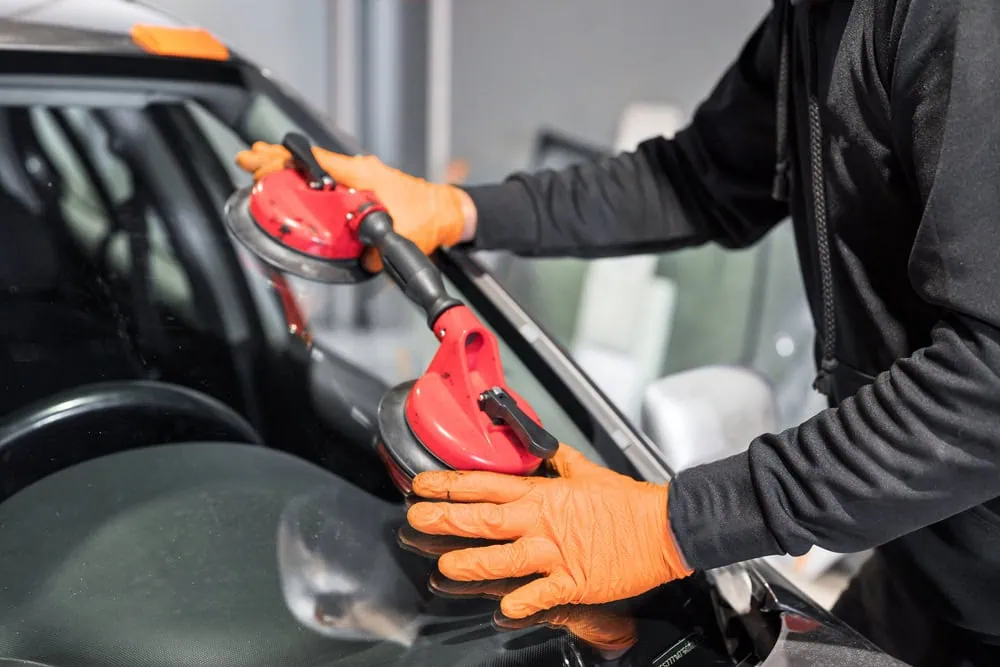
During windshield replacement, we must disconnect or move the camera assembly. Even movements measured in millimeters can affect the camera’s field of view. Think of it like adjusting a telescope—tiny changes in position create huge differences in what the device can see clearly.
The adhesive and mounting process can also shift the camera’s angle slightly. Your windshield might look perfect, but the camera could be pointing a fraction of a degree off from where it should be. That small difference is enough to confuse the computer systems that rely on camera input.
Temperature changes during the installation process can cause additional shifts. As materials expand and contract, the camera’s position can drift even after the initial installation appears correct. This is why professional calibration uses specialized equipment to verify exact positioning rather than relying on visual inspection alone.
Your windshield isn’t just glass—it’s a critical component of your vehicle’s safety system. The front camera mounts directly to the windshield or the area immediately behind it, creating a precise viewing angle that’s been programmed for your specific vehicle.
During windshield replacement, we must disconnect or move the camera assembly. Even movements measured in millimeters can affect the camera’s field of view. Think of it like adjusting a telescope—tiny changes in position create huge differences in what the device can see clearly.
The adhesive and mounting process can also shift the camera’s angle slightly. Your windshield might look perfect, but the camera could be pointing a fraction of a degree off from where it should be. That small difference is enough to confuse the computer systems that rely on camera input.
Temperature changes during the installation process can cause additional shifts. As materials expand and contract, the camera’s position can drift even after the initial installation appears correct. This is why professional calibration uses specialized equipment to verify exact positioning rather than relying on visual inspection alone.
Want live answers?
Connect with a First Class Auto Glass expert for fast, friendly support.
Vehicle manufacturers specify calibration requirements in their service procedures, and these requirements are more extensive than many people realize. Any windshield replacement on a vehicle with ADAS typically requires calibration, regardless of whether warning lights appear immediately.
Insurance companies increasingly require calibration documentation for claims involving ADAS-equipped vehicles. They understand that skipping calibration creates liability issues if safety systems fail to work properly after windshield replacement. Many insurers now specifically cover calibration costs as part of comprehensive glass coverage.
Static calibration happens while your vehicle is parked and uses specialized targets positioned at precise distances and angles around your car. We connect diagnostic equipment to your vehicle’s computer system and use the targets to teach the camera where to look for road markings, other vehicles, and obstacles.
This method works well for many vehicles and can be completed at your location with our mobile service. The process typically takes 30-60 minutes and requires a level surface with adequate space around your vehicle. Static calibration is often preferred because it’s controlled and doesn’t require road testing.
Dynamic calibration requires driving your vehicle under specific conditions while the system learns and adjusts itself. This method might involve driving at certain speeds on marked roadways while the computer analyzes camera input and makes corrections automatically.
Some vehicles require both static and dynamic calibration for complete system functionality. We know which method your specific vehicle needs based on manufacturer requirements and the types of ADAS features installed. The calibration method isn’t optional—using the wrong approach can leave your systems improperly configured.
Driving with uncalibrated ADAS systems puts you and other drivers at risk. Your lane departure warning might not activate when you drift out of your lane, or it might trigger constantly even when you’re driving correctly. Automatic emergency braking could fail to engage during a real emergency, or it might activate unexpectedly and cause a rear-end collision.
Insurance implications can be significant if you’re involved in an accident and investigators determine that improperly calibrated safety systems contributed to the incident. Some insurers may question coverage if required calibration was skipped after windshield replacement, especially if the calibration requirement was documented in your claim.
Your vehicle’s resale value can also suffer. Prospective buyers and dealers often check for ADAS system functionality, and vehicles with persistent warning lights or non-functional safety features are worth less in the marketplace. Proper calibration documentation helps maintain your vehicle’s value and marketability.
State safety inspections in New York are becoming more stringent about ADAS functionality. Vehicles with malfunctioning safety systems may not pass inspection, leaving you unable to register or legally drive your car until the problems are corrected. Getting calibration done correctly the first time avoids these complications.
Your vehicle’s safety systems are too important to leave to chance. Proper ADAS front camera calibration ensures your lane departure warnings, collision avoidance, and other safety features work exactly as designed. The investment in professional calibration pays for itself through improved safety and peace of mind.
Don’t wait for warning lights or system failures to address calibration needs. If your windshield has been replaced on a 2018 or newer vehicle, calibration is likely required regardless of whether problems are immediately apparent. Contact us at First Class Auto Glass for mobile ADAS calibration service that comes to your location in Suffolk County with the specialized equipment and expertise your vehicle deserves.
Article details:
Share:
Continue learning: