A crack in your windshield might seem minor — until your inspection sticker expires. Here's what New York's rules actually say, and when to act.
Share:

Summary:
You noticed the crack a few weeks ago. Maybe it was a rock off the Long Island Expressway, maybe it appeared overnight when the temperature dropped. Either way, it’s still there — and now your inspection is coming up.
The question isn’t just whether it looks bad. It’s whether a New York State inspector is going to flag it, hand you a rejection sticker, and send you home. That’s a real possibility, and the answer depends on specifics most drivers don’t know until they’re already sitting in the inspection lane.
Here’s what you actually need to know.
The short answer: it depends on two things — how long the crack is and where it sits on the glass.
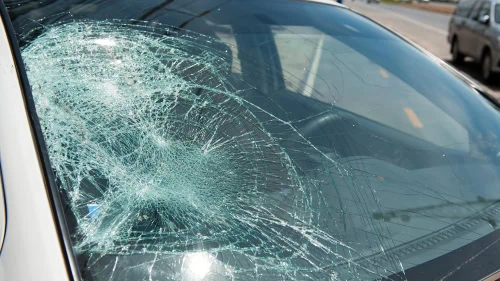
New York State DMV is specific about this. Any crack that is 11 inches or longer fails inspection automatically if any part of it falls within the area cleared by your windshield wipers. That’s the wiper-swept zone — the arc your wipers cover every time it rains. If your crack crosses into that zone and measures 11 inches or more, you will not pass.
Star-shaped cracks have a separate rule. If the diameter of the star break exceeds three inches, that’s also an automatic failure — regardless of where it sits on the glass.
What often catches drivers off guard is the inspector’s discretion. Even a crack shorter than 11 inches can fail if the inspector determines it’s directly in your line of vision and impairs a clear sightline. There’s no magic number that guarantees a pass. Location matters as much as length.
Not all windshield damage is the same, and the type of crack or chip you have affects both whether it can be repaired and how quickly it might spread.
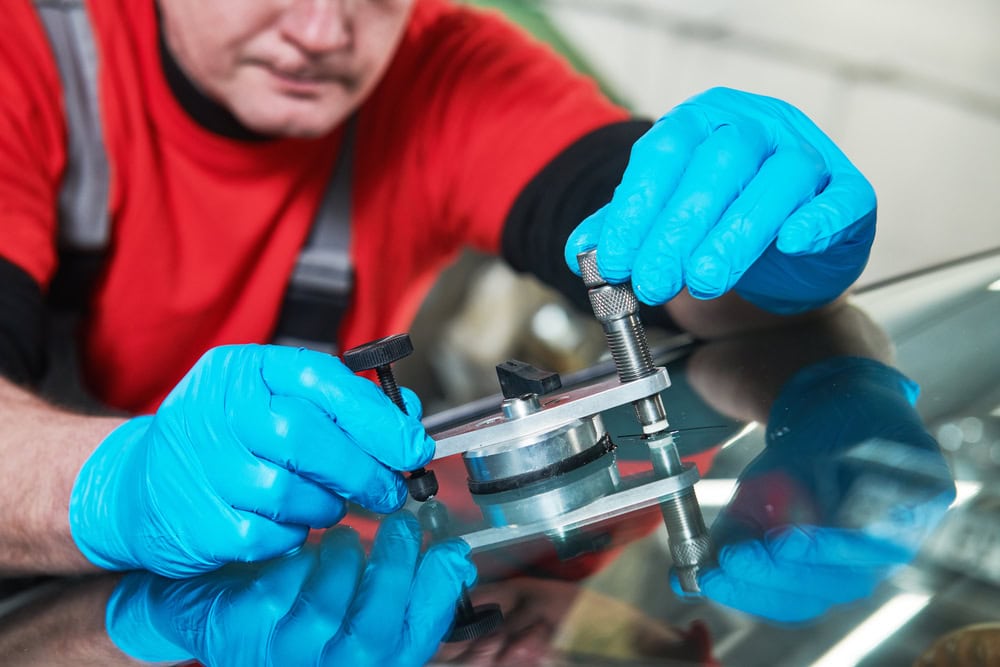
A bullseye chip is the round impact point you get when a rock hits the glass dead-on. If the diameter is under about an inch, it’s typically repairable with resin injection — a process that fills the void, restores clarity, and stops the damage from spreading. These are the best-case scenarios: quick to fix, usually no replacement needed.
A star break looks like a bullseye with lines radiating outward from the center. If the overall diameter stays under three inches, it’s often repairable. Once it crosses that threshold, you’re looking at a replacement — and as noted above, a star crack over three inches also fails NYS inspection on its own.
Edge cracks are a different story. These start at or near the edge of the windshield and tend to spread fast. Because of where they originate, they compromise the structural bond between the glass and the frame. Edge cracks almost always require a full replacement, and they’re not something to sit on.
Stress cracks are the ones that seem to appear out of nowhere — no impact, no chip, just a line that showed up one morning. These are caused by temperature extremes and thermal stress, and they’re more common on Long Island than most drivers realize. The freeze-thaw cycle that hits Suffolk and Nassau County every winter — water seeping into a tiny chip, freezing overnight, expanding, and widening the gap — is one of the most common reasons a small, manageable chip becomes a 14-inch crack by February.
Floater cracks and combination breaks fall somewhere in the middle. A floater crack starts more than two inches from the edge and may be repairable if it’s short enough and not in the wiper path. Combination breaks involve both a bullseye and radiating cracks — repairability depends on the total size and location.
The practical takeaway: if you have a chip under an inch or a crack under roughly six inches that isn’t in your direct line of sight and isn’t at the edge of the glass, there’s a real chance it can be repaired rather than replaced. Anything larger, anything at the edge, or anything sitting in the center of your field of vision almost certainly needs a full replacement.
Here’s the part most people don’t factor in until it’s too late.
A chip that’s sitting quietly in October is not the same chip in January. Long Island winters are hard on windshields in a way that’s easy to underestimate. The freeze-thaw cycle — temperatures dropping overnight, water working its way into existing damage, freezing, expanding, and cracking the glass further — turns small, repairable chips into cracks that run halfway across the windshield.
Road salt and sand make it worse. The Long Island Expressway and the Southern State Parkway get treated heavily through the winter months, and when that material loosens in late winter and early spring, it kicks up debris at highway speeds. Drivers who commute daily across Suffolk and Nassau County are getting hit with that debris every morning. A windshield that made it through December intact can pick up two or three new chips by March.
The timing matters because of inspections. New York State requires annual vehicle inspections, and a significant number of Long Island drivers have stickers expiring in late winter or early spring — right at the end of the season when cumulative damage is at its worst. If you’ve been watching a crack and telling yourself you’ll deal with it, the combination of a spreading crack and an expiring inspection sticker creates real urgency.
If a crack spreads past the repairable threshold before you get it addressed, what could have been a 30-minute repair becomes a full replacement. Getting a chip looked at while it’s still small is almost always cheaper, faster, and less disruptive than waiting.
Want live answers?
Connect with a First Class Auto Glass expert for fast, friendly support.
Some cracks can’t be saved, and it’s worth knowing the line before you find out the hard way at an inspection station.
A full windshield replacement is necessary when the crack is longer than roughly six inches, when it originates at the edge of the glass, when it sits directly in your primary line of vision, or when the damage penetrates through more than the outer layer of the laminated glass. If the inner layer is compromised, resin can’t restore structural integrity — replacement is the only safe option.
We come to you — your driveway, your office parking lot, wherever works — and a full replacement typically takes 60 to 90 minutes on-site.

This is one of the most misunderstood questions we hear, and it’s worth getting the answer right — because it affects whether you pay anything out of pocket.
New York is not what’s technically called a “mandatory zero-deductible state.” That’s a common misconception. Unlike Florida or Kentucky, New York does not require insurers to automatically waive your deductible on glass claims. What New York does allow — under NY Insurance Law § 3411(k) — is for drivers to add full glass coverage as an optional endorsement to their comprehensive policy. When you have that endorsement, your deductible is waived for glass repair or replacement, which means most customers pay nothing out of pocket.
The practical question is whether you have it. Many Long Island drivers do — particularly those with newer vehicles who are already carrying comprehensive coverage — but many don’t know for certain until they check. The other thing worth knowing: filing a glass claim in New York does not raise your insurance rates. Under NYCRR Title 11, Part 169, comprehensive claims cannot be surcharged. So if you’re hesitating because you don’t want your premiums to go up, that’s not a concern here.
We handle the entire insurance process for our customers — filing the claim, coordinating with your insurer, managing the paperwork. You don’t have to spend an afternoon on hold with your insurance company. You schedule the appointment, and we take care of the rest.
If your vehicle was made in roughly 2016 or later, there’s a good chance it has a front-facing camera mounted behind the windshield. That camera is what powers your lane departure warning, your automatic emergency braking, your adaptive cruise control — the systems that are supposed to intervene when something goes wrong.
When the windshield is replaced, that camera’s calibration is disrupted. The angle shifts slightly, the reference points change, and if the system isn’t recalibrated afterward, those safety features may not function correctly. Lane assist might not alert you. Emergency braking might not engage at the right moment. The car might behave as though the system is working when it isn’t.
This is called ADAS calibration — Advanced Driver Assistance Systems — and it’s a step that a lot of drivers don’t know to ask about until after the fact. Some shops skip it or send customers to a dealership to handle it separately, which means another appointment, another half-day, another trip.
We perform ADAS calibration on-site, at the same time as the replacement, using manufacturer-approved equipment. There’s no separate facility visit, no follow-up appointment. When we leave your driveway, your glass is installed and your safety systems are calibrated and functioning. For drivers across Nassau and Suffolk County with newer vehicles, this is one of the most important things to confirm before you book with anyone — because not every mobile glass service can do it.
The bottom line is straightforward. If your crack is 11 inches or longer anywhere in the wiper-swept area, it will fail a NYS inspection. If it’s a star break over three inches in diameter, same result. Smaller damage in your direct line of sight may also fail at the inspector’s discretion. And if you’re in the middle of a Long Island winter, a crack that’s borderline today may not be borderline in two weeks.
The smarter move is to get it assessed before your inspection — not after. A chip or short crack that’s still repairable can be handled in 30 to 45 minutes on-site. If it needs a full replacement, we can typically get that done in 60 to 90 minutes, handle your insurance claim, and recalibrate your camera systems before we leave.
We’ve completed over 10,000 services across Suffolk and Nassau County since 2016, and every job is handled personally by the owner — no subcontractors, no call centers, no surprises. If you’ve got a crack and an inspection coming up, reach out to us and find out exactly where you stand before the sticker expires.
Article details:
Share:
Continue learning: