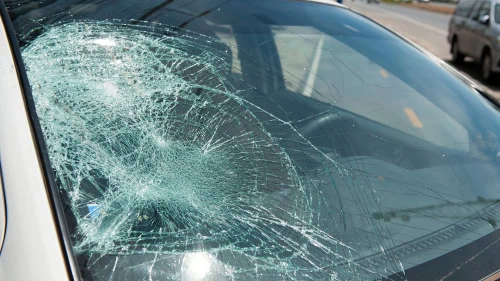
A chip you ignored all summer can become a crack by the first week of school. Here's what Long Island families need to know before September hits.
Share:

Summary:
You’ve been meaning to get that chip looked at since June. It’s been sitting there, small and easy to ignore, through road construction on the LIE, a few weekend trips out east, and the full stretch of summer heat. Now it’s August, school is a few weeks away, and suddenly you’re about to start putting a lot more miles on the car — school drop-offs, after-school pickups, sports, the whole fall routine. This is the moment a lot of Long Island families realize that “small chip” might not be so small a problem anymore. Here’s what you actually need to know.
Windshield damage isn’t one-size-fits-all. The type of damage you have determines whether it can be repaired quickly or whether you’re looking at a full replacement — and that distinction matters a lot when you’re trying to figure out what to do next.
The most common types are bullseye chips, star breaks, half-moon chips, edge cracks, and combination breaks. Each one behaves differently, spreads differently, and responds to repair differently. Knowing which one you have is the first step toward making a smart decision, not just a fast one.
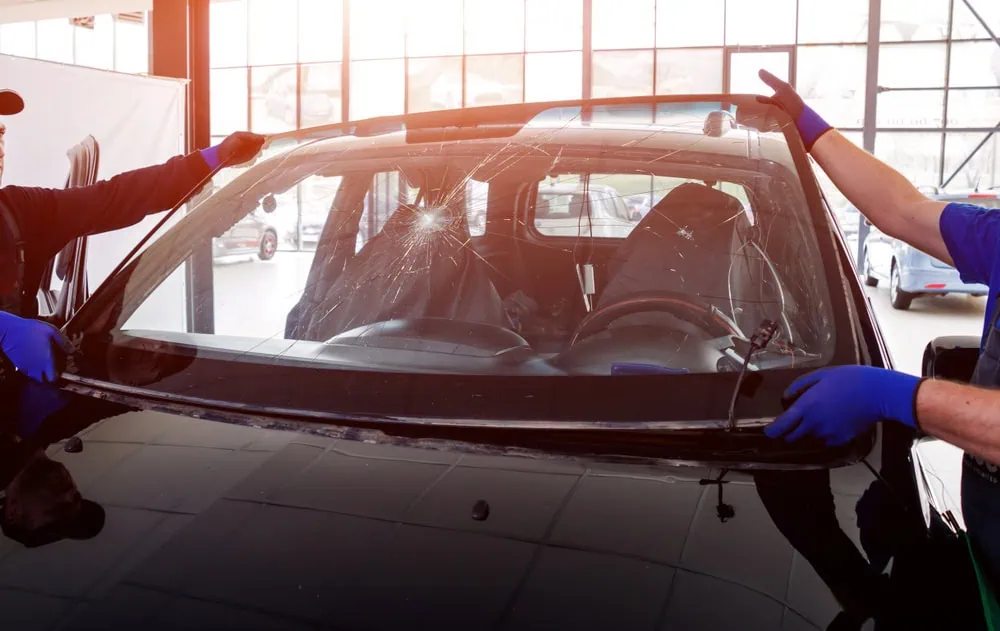
A bullseye chip is exactly what it sounds like — a circular impact point with a darker center, caused by a rock or piece of road debris hitting the glass at a direct angle. These are the most straightforward to repair, provided they’re caught early. A bullseye under about an inch in diameter, located outside your direct line of sight and away from the edges of the glass, is typically a strong candidate for resin repair.
We can handle most bullseye repairs in 30 to 45 minutes at your location on Long Island, and you’re back on the road. A half-moon break is similar to a bullseye but the impact point is off-center, creating a partial circle rather than a full one. It behaves much the same way in terms of repairability — size and location are the key factors.
Star breaks are a bit different. They radiate outward from the impact point in multiple directions, creating a starburst pattern. Small star breaks can often be repaired, but the legs of the break are the concern — once they start extending, the damage becomes harder to stabilize.
A star break that’s been sitting through a Long Island summer, with weeks of heat and thermal expansion, may have already grown beyond what a simple repair can address. Late August and September bring a shift in temperatures across Long Island — hot days start giving way to cooler nights. Glass expands in heat and contracts in cold. That cycle puts stress on any existing damage, and a chip that stayed stable all summer can crack overnight once the temperature starts swinging. If you’ve been watching a star break since July, the window for a straightforward repair may be closing faster than you think.
Edge cracks are a different situation entirely. These are cracks that start within two inches of the windshield’s outer edge, and they almost always require full replacement rather than repair. The reason is structural. The edges of your windshield are where the glass bonds to the vehicle frame, and that bond is what gives the windshield its strength.
Your windshield provides up to 60% of your vehicle’s roof crush strength in a rollover — it’s not decorative, it’s structural. A crack compromising the edge weakens the entire assembly in a way that resin injection simply can’t fix.
Combination breaks involve multiple damage types at the same point — typically a bullseye or star break that has also developed a crack radiating outward. By the time damage has reached this stage, it’s usually past the threshold for repair. If you have three or more separate damage points anywhere on the glass, that’s also a replacement situation regardless of how small each individual spot might appear.
There’s one more factor that changes the conversation for a lot of Long Island drivers, and it’s one that most people don’t think about until they’re already at the shop: the ADAS camera zone. Vehicles made after 2016 — which describes a large share of the cars on Long Island roads — typically have a front-facing camera mounted at the top center of the windshield, behind the rearview mirror. That camera powers your lane departure warning, your automatic emergency braking, and your forward collision alerts.
A chip or crack anywhere near that zone isn’t just a visibility issue. It may affect whether those safety systems work correctly. And if the windshield needs to be replaced, the camera has to be recalibrated afterward — that’s not optional, it’s mandatory for the system to function as designed. We handle ADAS recalibration as part of our replacement service on Long Island.
Want live answers?
Connect with a First Class Auto Glass expert for fast, friendly support.
Here’s the thing most people don’t realize: if you have comprehensive auto insurance in New York, there’s a good chance this costs you nothing out of pocket. New York State law allows window glass coverage to be sold without a deductible, and state regulations prohibit insurers from using a single comprehensive glass claim to surcharge your premium. That means filing a claim for a chip repair or windshield replacement generally won’t raise your rates.
The fear of a rate increase is the single biggest reason Long Island drivers delay windshield repairs. For most people with comprehensive coverage, that fear isn’t warranted — and letting it keep you from acting is what actually costs you, when a repairable chip becomes a full replacement.
This is the question we hear more than almost any other, and it’s worth answering directly. Under New York Insurance Law and the corresponding state regulations, comprehensive claims — which is the coverage type that applies to glass damage — cannot be used as the basis for a premium surcharge under a merit rating plan. In plain language: a single glass claim in New York is not supposed to trigger a rate increase.
That’s different from, say, an at-fault accident claim, which absolutely can affect your premium. Glass damage is treated separately because it’s not a fault-based event. A rock kicked up by a truck on the Northern State Parkway isn’t a driving error — it’s road debris, and the insurance system in New York reflects that.
What this means practically is that if you’ve been driving around with a chip because you’re worried about what it’ll do to your rates, you may be paying a price — in risk — that you don’t actually have to pay. The chip is still growing. The repair window is still shrinking. And the coverage you’re already paying for may well cover the whole thing.
Some comprehensive policies in New York are written with a zero deductible specifically for glass claims. Others have a standard deductible that applies. We verify your coverage and handle the full insurance process for our Long Island customers — that includes filing the paperwork and communicating directly with your insurer so you don’t have to spend an afternoon on hold.
Long Island’s back-to-school season creates a specific set of conditions that make windshield damage more urgent than it might feel. Driving frequency goes up significantly. School drop-offs, afternoon pickups, weeknight activities, fall sports — the number of daily trips a family makes roughly doubles compared to the slower pace of mid-summer.
More trips means more time on roads like Sunrise Highway and the LIE, both of which have been active construction corridors all summer. Construction zones are one of the primary sources of rock chip damage, and those conditions don’t disappear when school starts. School buses return to Long Island residential streets in September, and that matters more than people think. Buses stir up road debris — sand, gravel, small stones — that settles on neighborhood roads over summer. Following a bus through a school zone puts you directly in the path of that debris.
Then there’s the temperature issue. August nights on Long Island are already starting to cool. By mid-September, the gap between daytime highs and overnight lows is significant enough to put real thermal stress on glass. A chip that’s been sitting quietly since July may not survive the first cold snap. Once a chip spreads into a crack — especially one that reaches the edge of the glass or crosses the ADAS camera zone — you’ve moved from a 30-minute repair to a 90-minute replacement.
The back-to-school season is also one of the busiest times of year for Long Island families. Schedules fill up fast. The window between now and the first full week of school is genuinely one of the easiest times to handle this — before the fall routine makes everything harder to schedule. We’re a mobile operation, which means we come to you: your driveway, your workplace, wherever the car is. You don’t lose a morning dropping the car off somewhere.
If you’ve got a chip that’s been sitting since summer, now is the right time to have it looked at. The conditions on Long Island in late August and September — temperature swings, heavier driving, construction debris, school bus traffic — are exactly what turn a small repair into a bigger one.
Most chips are still repairable if you act before they spread. Most Long Island drivers with comprehensive insurance pay nothing out of pocket. We handle the whole process — repair, replacement, insurance paperwork, and ADAS calibration if your vehicle needs it — at your location, usually within the same day.
If you’re not sure what type of damage you have or whether it’s repairable, reach out and we’ll tell you exactly where you stand. First Class Auto Glass handles assessments, repairs, replacements, and everything in between for Long Island families.
Article details:
Share:
Continue learning: