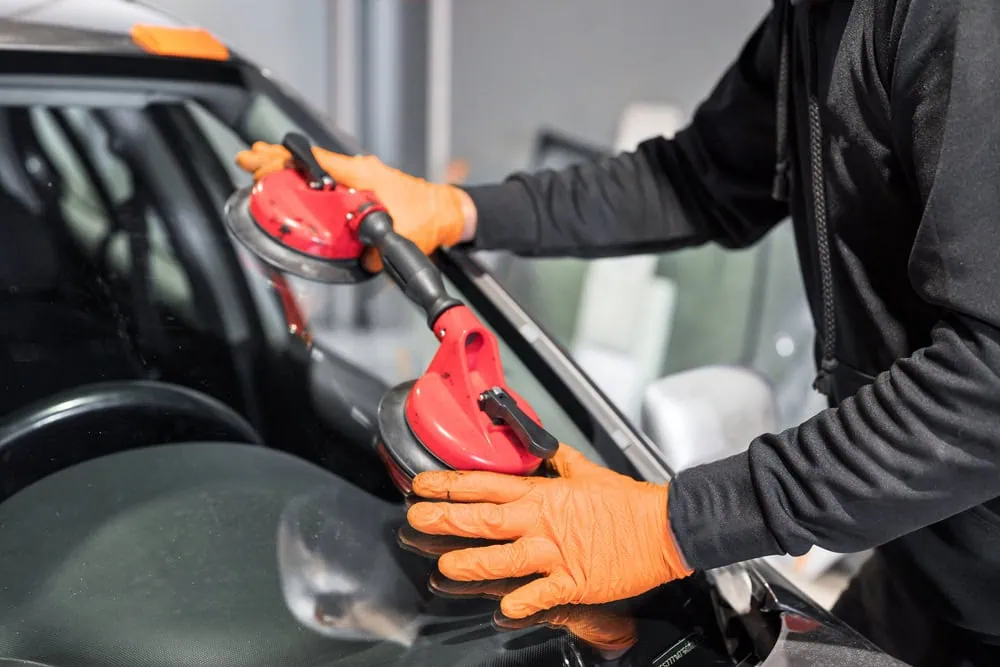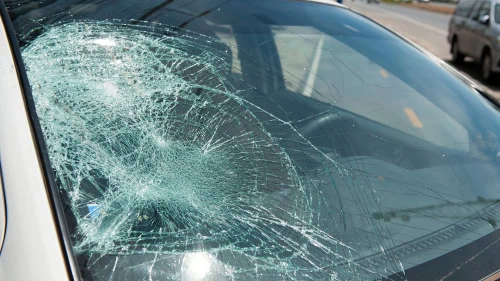
That tiny camera behind your rearview mirror is basically your car’s overprotective parent. Here’s why ADAS calibration after windshield replacement isn’t just a "suggestion"—and the scary things that happen when shops pretend it’s optional.
Share:
Summary:
ADAS stands for Advanced Driver Assistance Systems—basically the “guardian angel” suite in modern cars. You probably know them by their stage names: lane departure warnings, automatic emergency braking, adaptive cruise control, and “Hey, you’re about to hit that” alerts. These features use cameras and radar to “see” the world. ADAS calibration is the high-tech process of teaching those “eyes” how to see straight again. When we swap out your glass, the camera bracket is moved to the new windshield. Even if it looks perfect to the human eye, the alignment has changed. If your front camera is off by just one degree, your collision avoidance system could miscalculate your stopping distance by eight feet or more. In the world of Nassau County traffic, eight feet is often the difference between a “close call” and an awkward phone call to your insurance agent. ADAS calibration makes sure your car’s brain knows exactly where its eyes are looking, preventing your safety tech from having a mid-life crisis at 65 mph.
It’s not just for Teslas and luxury European cars that cost more than a Suffolk County starter home. Nearly 90% of 2024–2026 model year vehicles require ADAS calibration after windshield replacement. Back in 2016, it was only about 25%. Today, if you bought a car in the last decade and it doesn’t try to steer itself back into the lane when you’re distracted by a bagel, you’re in the minority.
The auto glass world has changed. Ten years ago, we just needed some glue and a steady hand. Now, ADAS calibration is featured on more than a third of all repair estimates. If a shop tells you they “don’t do that techy stuff,” they’re basically handing you back a car that’s half-blind. Regardless of if you’re driving a Honda Civic, a Toyota RAV4, or a Ford F-150, your forward-facing camera is the captain of the ship. If the captain is looking at his feet instead of the horizon, you’re going to hit an iceberg (or a Honda).
Skipping ADAS calibration is like deciding your brakes are “optional” because you usually use the parking gear to stop. Your dashboard might look fine—no scary red lights, no “Your Car Is Broken” sirens—but your systems are essentially guessing. Research shows that vehicles without proper ADAS calibration after a glass swap experience total system failure in emergency situations. In tests, automatic braking simply… didn’t.
Beyond the obvious “don’t crash” factor, there’s the legal headache. ADAS-related lawsuits are skyrocketing. If you’re in a fender bender and it’s found that your ADAS calibration was never performed after a windshield replacement, your insurance company might suddenly become very hard to reach. Some shops might tell you the system “calibrates itself” while you drive. That’s a myth—it’s the automotive equivalent of “the check is in the mail.” No current system can fix a physical misalignment on its own. If a shop says otherwise, they’re either stuck in 1995 or trying to save themselves some work at your expense.
Want live answers?
Connect with a First Class Auto Glass expert for fast, friendly support.
This isn’t just turning it off and back on again. ADAS calibration is a precise technical dance that requires specialized gear and a controlled environment. There are two main ways we do it: Static and Dynamic.
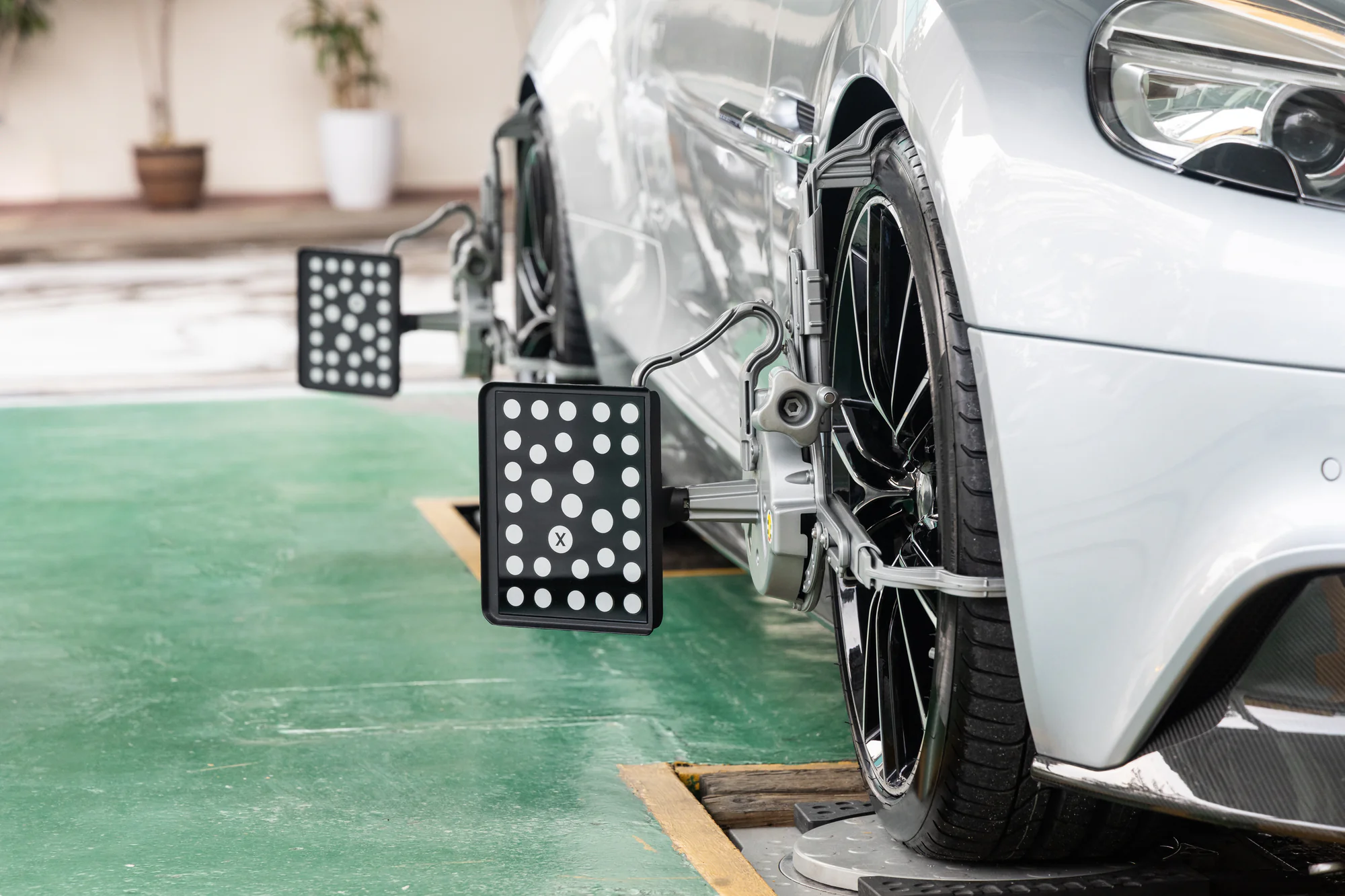
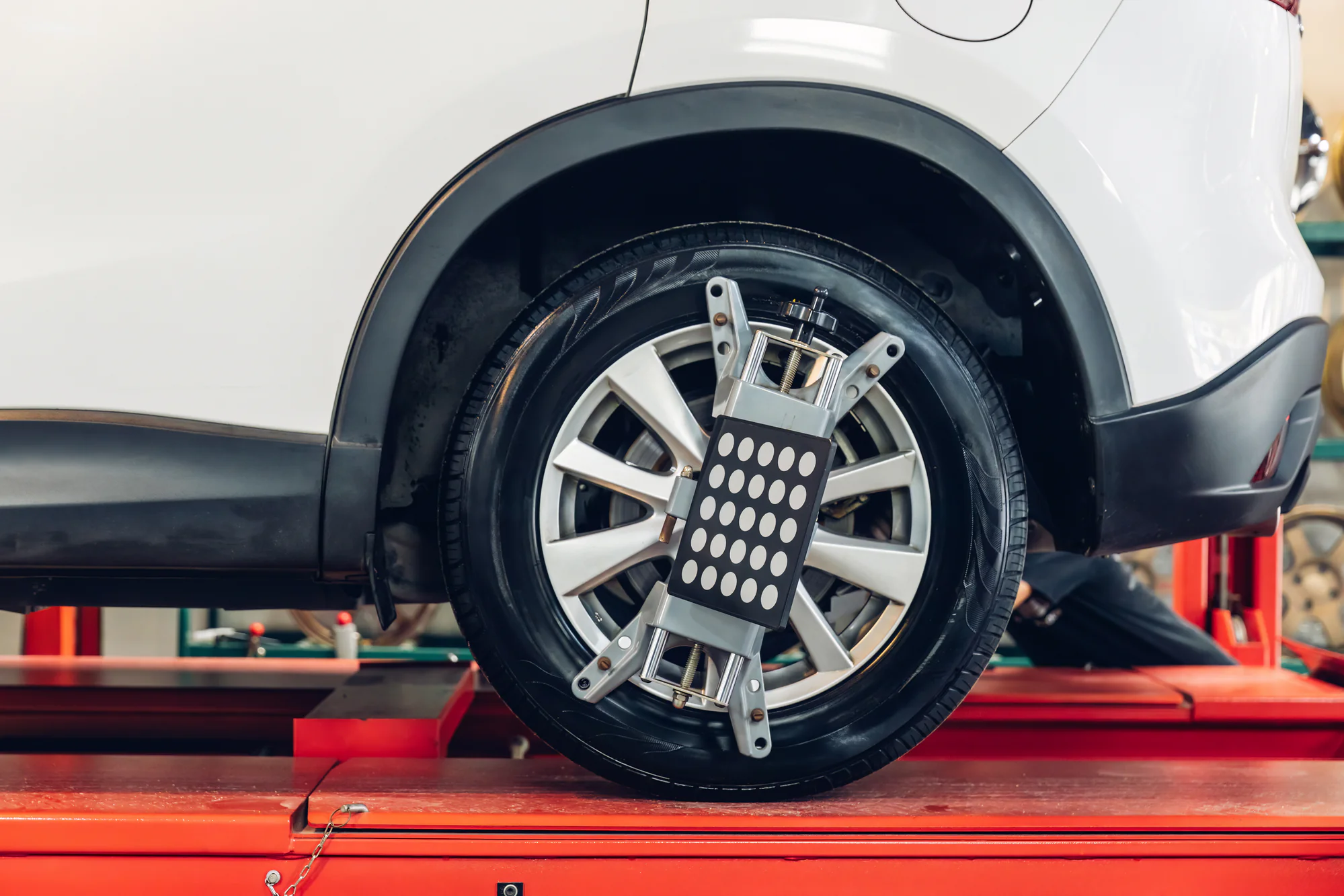
Static calibration happens while the car is parked. We set up specialized targets—which look a bit like modern art or QR codes on steroids—at very specific distances. Your car’s computer then stares at these targets until it remembers what “straight” looks like. It’s like a vision test for your SUV. Dynamic calibration, on the other hand, involves taking the car for a “prescribed drive.” We connect a diagnostic tool and drive at specific speeds on roads with clear markings. Sometimes your car needs both. It’s a bit like physical therapy for your sensors, guaranteeing they’re ready for the real world.

You can’t do ADAS calibration with a Swiss Army knife and some duct tape. It requires a massive investment in diagnostic scan tools and manufacturer-specific software. Every car brand speaks a different language—Honda doesn’t talk like Ford, and BMW definitely doesn’t talk like Toyota.
For static ADAS calibration, we need a perfectly level floor (harder to find than a parking spot at the Smith Haven Mall) and laser-guided targets. For dynamic sessions, we need weather that isn’t “Long Island Blizzard” or “Summer Monsoon,” because rain and snow can confuse the sensors during their learning phase. This gear is expensive—usually upwards of $20,000—which is why many smaller shops just cross their fingers and hope you don’t notice. We don’t do “hope.” We do math.
Usually, ADAS calibration adds about $300 to $600 to your bill. We know, we know—that’s a lot of BEC sandwiches. But here’s the good news: if you have full glass coverage or a comprehensive insurance policy in New York, it’s almost always 100% covered. Because it’s a manufacturer-required safety step, insurance companies treat it as part of the repair, not an “extra.”
Working with a shop that knows how to handle the insurance paperwork is key. We document everything—the scan results, the target alignment, the successful pass—so the insurance adjusters don’t have an excuse to be stingy. If you’re paying out of pocket, yes, it’s an investment. But compared to the cost of a collision or a voided warranty, it’s the best money you’ll spend on your car this year. Don’t let a “cheap” quote fool you; if it doesn’t include ADAS calibration, it’s not a finished job.
At the end of the day, your car’s safety tech is only as good as its last check-up. If you’ve just had a windshield replacement, ADAS calibration is the final, non-negotiable step to keeping you safe on the LIE, the Sunrise Highway, and everywhere in between. You wouldn’t let a surgeon finish a procedure without checking their work, so don’t let an auto glass shop return your car without verifying its “eyes.”
For drivers across Suffolk County and Nassau County, we make the process painless. We bring the high-tech gear to you. With over 20 years of experience and more than 10,000 successful jobs under our belts, we handle the glass, the insurance, and the ADAS calibration in one go. No trips to the dealer, no waiting in a greasy lobby for four hours, and no driving a car that thinks a squirrel is a semi-truck. If your windshield is cracked and your car has a camera, give us a shout—we’ll make sure your car stays as smart as it was the day you bought it.
Article details:
Share:
Continue learning: