Understanding New York's windshield laws can save you from costly tickets and safety risks in Nassau and Suffolk Counties.
Share:
Summary:
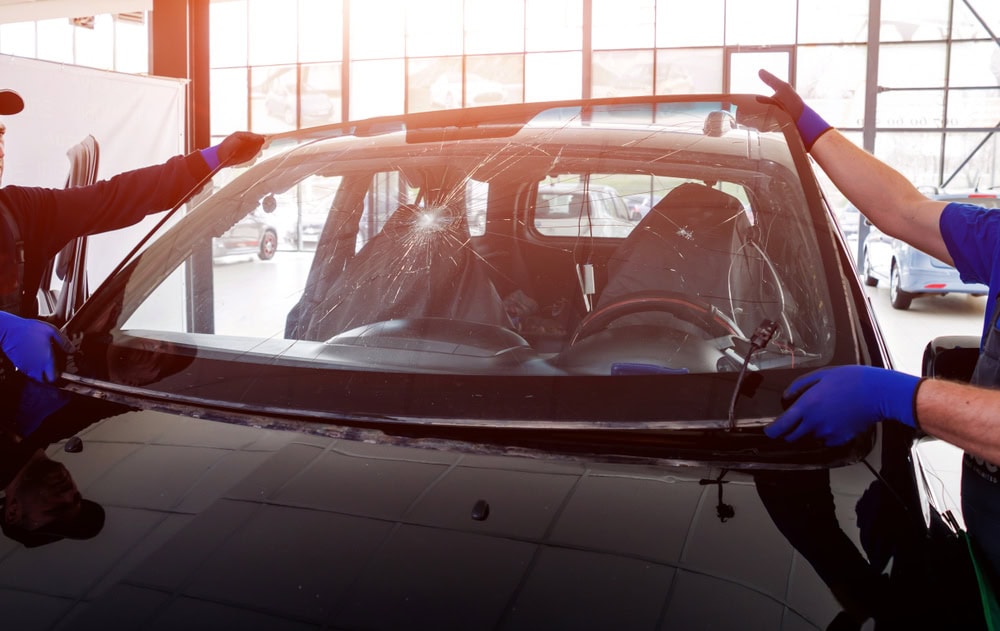
New York laws prohibit driving with windshields that have cracks, chips, discoloration or other defects that impair the driver’s view of the road. But here’s where it gets tricky—the law uses broad language about “impaired vision” rather than specific measurements.
It is up to each individual police officer to determine if your view of the road is impaired or obstructed. This means what might pass one officer’s inspection could get you a ticket from another.
The reality is that you may be able to get away with legally operating your vehicle with a cracked windshield. But the real question is, are you safe doing it?
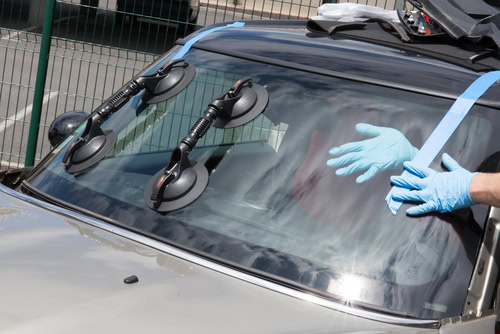
While the general law is vague, New York’s vehicle inspection standards provide clearer guidelines. Windshield cracks or chips smaller than ¾-inch in diameter are permitted if they are not located within 3″ of another crack.
However, location matters just as much as size. Any cracks or chips or other damage that can potentially obstruct clear view of the road must not be within the critical vision area, defined as the area directly above the steering wheel, two inches from the top and one inch from the sides.
The inspection standards also specify that cracks of 11 inches or longer are not allowed in the area cleared by windshield wipers. Interestingly, cracks longer than 11 inches or “star breaks” greater than 3 inches are not allowed IF any part of the crack is within the area cleared by the windshield wipers. So technically, it is completely within the law to have your windshield cracked all the way from one side to the other across the bottom, as long as it is under the wipers.
But don’t let this technicality fool you. Legal, but not necessarily safe. Lenient size restrictions do not mean that you can have a ten inch crack directly in the driver’s line of vision. A separate section of state law dictates that no vehicle may operate on the roadway with glass that is broken, damaged or discolored so that the driver’s visibility is obstructed.
Your annual vehicle inspection is where windshield damage often catches up with you. Your vehicle will likely not pass inspection if the crack fits the description above. In addition, your vehicle’s windshield must be made of safety glass.
According to the Commissioner’s Regulations covering vehicle inspections, your car will not pass inspection if: Any window is broken or has exposed sharp or jagged edges. Your windshield has a crack more than eleven inches long, with any part of the crack in the windshield wiper path. The window has a “star” crack that is more than three inches in diameter.
Here’s something many drivers don’t realize: These inspection guidelines above are just that – guidelines. While your car may pass inspection, police can still ticket you if they determine your vision of the road is impaired.
The consequences of failing inspection go beyond just the inconvenience. You’ll need to get the windshield repaired or replaced before you can legally register your vehicle, and driving with an expired inspection sticker carries its own penalties. A cracked windshield ticket in New York can cost anywhere from $0 to $150, depending on the violation’s circumstances and any additional fees. You risk getting this ticket when your windshield is obstructed by a sign or severe damage that hinders the driver’s visibility.
Want live answers?
Connect with a First Class Auto Glass expert for fast, friendly support.
Beyond legal concerns, cracked windshields pose real safety hazards that every Nassau and Suffolk County driver should understand. A cracked windshield can present several safety issues for drivers and passengers. One of the most significant risks is that a cracked windshield can impair the driver’s visibility, making it difficult to see the road and other vehicles, which can lead to accidents.
The structural integrity issue is often overlooked but equally important. A cracked windshield can also weaken the structural integrity of the car, making it more susceptible to collapse in the event of a rollover or collision.

What starts as a minor chip can quickly become a major safety hazard. Temperature changes, road vibrations, and even minor impacts can cause small cracks to spread rapidly across your windshield.
Even repairing damage that falls within the “acute area” (the area directly in front of the driver) is frowned upon by state officials concerned with driver safety. Since repair of even very small breaks can cause a perceptible imperfection in the glass that naturally draws the eye away from the road to focus on the blemish. Think of the last road trip you took where an insect was smashed right in your line of vision. How many moments were you focused on or aware of the blob of bug juice in front of you? Each of those moments spent glancing at the bug carcass was a precious second in which you weren’t focused completely on navigating your surroundings – and sometimes a second is all it takes for an accident to happen. Windshield damage can be just as distracting as a dead critter, if not more.
This is why many experts recommend addressing windshield damage immediately, regardless of whether it technically meets legal requirements. The distraction factor alone can increase your accident risk, especially during heavy traffic conditions common on Long Island’s major highways like the LIE and Southern State Parkway.
Modern vehicles add another layer of complexity. Many newer cars have rain sensors, cameras, and other technology integrated into the windshield area. Damage near these components can affect their functionality, creating additional safety concerns beyond just visibility.
If your vehicle has advanced driver assistance systems (ADAS), windshield damage becomes even more critical. Over 80% of new vehicles in the United States are expected to have at least one ADAS feature by 2025, making this relevant for most Nassau and Suffolk County drivers with newer vehicles.
Most vehicle manufacturers require ADAS calibration after windshield replacement . The cameras and sensors mounted on or near your windshield need precise alignment to function correctly. Even small changes in positioning during installation can affect how these safety systems operate.
Driving with uncalibrated ADAS systems creates serious safety risks and potential liability issues. Your automatic emergency braking may not engage at the right distance, lane departure warnings might not activate properly, and adaptive cruise control could malfunction.
The insurance implications are significant too. Insurance companies also typically require proof of calibration to maintain coverage compliance. Insurance companies may deny claims if they discover safety systems weren’t properly calibrated after required services.
This means that if you have a newer vehicle with features like automatic emergency braking, lane departure warnings, or adaptive cruise control, you can’t just replace the windshield—you need proper ADAS calibration afterward. You could also face legal liability if an accident occurs and investigators find that safety systems were compromised due to improper calibration.
When windshield damage crosses the line from minor to problematic, prompt professional repair becomes essential. Depending on the extent of the damage, you may be able to repair your windshield. Windshields can typically be repaired if the crack is less than 3″ in length, or if you have a small chip that is smaller than the size of a quarter.
For Nassau and Suffolk County drivers, choosing a qualified local provider ensures compliance with New York’s requirements and proper ADAS calibration when needed. Windshield replacements can be surprisingly expensive, especially in modern vehicles equipped with sensors, cameras, and advanced driver-assistance systems (ADAS) that require recalibration after glass installation. Knowing whether your policy covers these costs—and whether your state has special protections for auto glass claims—can save you time, stress, and money.
The good news is that most comprehensive insurance policies cover windshield replacement, and many offer repair coverage without a deductible. When you need professional windshield service in Nassau or Suffolk County, we at First Class Auto Glass provide mobile service with lifetime warranty coverage, ensuring your vehicle meets all legal requirements while getting you back on the road safely.
Article details:
Share:
Continue learning: