
That crack might look minor. But depending on where it is, how deep it goes, and what your car's safety systems depend on, repair may no longer be an option.
Share:

Summary:
You noticed the chip a few weeks ago. Maybe it happened on the Long Island Expressway when a truck kicked up a piece of gravel at 65 miles per hour. It seemed small, so you left it alone. Then one cold morning, you walked out to your car and found a crack running halfway across the glass.
That is how it usually goes. Now you are trying to figure out if you are looking at a repair or a full windshield replacement, and if waiting any longer is safe.
The honest answer depends on five specific things. Here is what they are and what they mean for your car.
There is a common assumption that small means fixable and large means not. That is partially true, but size is only one part of the picture. A crack’s location, depth, and the question of whether it has reached the edge of the glass all factor into if repair is even possible.
The general threshold most certified technicians work with is straightforward: chips smaller than a quarter and cracks shorter than a few inches, kept away from the driver’s direct line of sight and the edges of the glass, can usually be repaired. Once damage crosses those lines, replacement becomes the safer and often the only option.
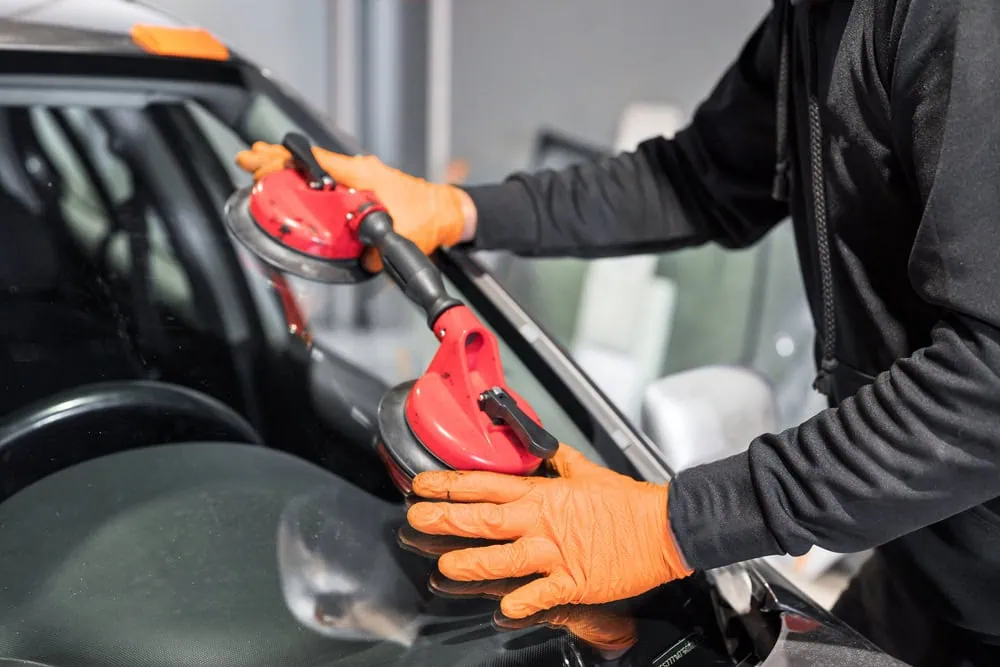
Edge cracks are a different category entirely. When a crack reaches the border of the windshield, even if it is only two inches long, the structural integrity of the glass is already compromised. Edge cracks spread faster than interior cracks, and they tend to do it suddenly.
One temperature swing or one hard stop can turn a two-inch crack into one that spans the entire windshield. This matters more than most people realize because the windshield is not just glass; it is a structural component. In a rollover, it contributes significantly to keeping the roof from collapsing. A crack that starts at the edge undermines that. No repair restores it to a safe condition, meaning replacement is the only path forward.
On Long Island, this becomes especially relevant in late fall and winter. Nassau and Suffolk County drivers deal with aggressive freeze-thaw cycles. A small chip sitting since October can crack to the edge overnight once temperatures drop below freezing, as water works its way into the fracture, freezes, expands, and causes the glass to give way.
If you are seeing a crack near the edge of your windshield right now, waiting is a gamble on how cold tonight gets. Edge cracks longer than two inches are widely considered non-repairable by certified auto glass technicians for good reason. The damage has already affected the structural layer. Repair resin can fill a void, but it cannot restore the bond between the inner and outer layers of laminated glass once that edge seal has broken.
Two more signs that repair is off the table include damage directly in the driver’s line of sight or penetration through both layers of the windshield’s laminated construction.
Regarding the line-of-sight issue, even a small chip sitting in the center of your forward view presents a problem. Repair resin fills the crack and prevents it from spreading, but it does not make the glass optically perfect. There will be some distortion and haziness. In your peripheral vision, that is tolerable, but directly in front of you at highway speed, it is not.
Most reputable technicians will not attempt a repair in the driver’s primary sightline for this reason, and the safety standard dictates that damage in that zone requires replacement. The penetration issue concerns the glass itself. Modern windshields are laminated, consisting of two layers of glass bonded around a plastic interlayer. When damage only affects the outer layer, repair is often viable. When it punches through both layers or past the halfway point of the glass thickness, the structural and optical integrity is gone.
You cannot repair your way back from that. The glass has to be replaced. This is something many drivers forget to ask about. They see a chip, assume it is surface-level, and book a repair. A qualified technician will probe the depth of the damage before recommending anything. If someone told you your chip looked repairable without checking the depth, that warrants a second opinion.
Want live answers?
Connect with a First Class Auto Glass expert for fast, friendly support.
The first three signs are mostly visible because you can see the crack, locate it, and make a rough judgment. The last two are less obvious and catch many drivers off guard, particularly those in Nassau and Suffolk County driving newer vehicles.
These signs do not concern the size or location of the damage. They relate to what happens to your car’s safety systems when the windshield is compromised and what happens when a replacement is done without proper follow-through.
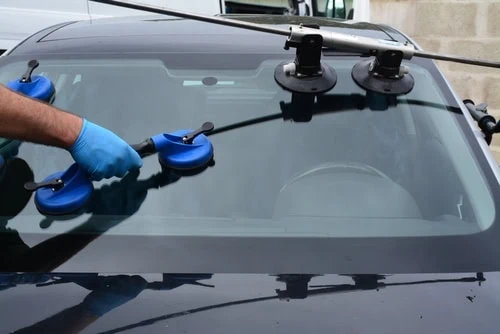
Once a crack exceeds six inches in length, the risk of sudden windshield failure more than doubles. That figure comes from safety research and holds regardless of whether the crack appears to have stopped spreading.
A crack that looks stable is not necessarily stable. Glass under stress does not always give obvious warning signs before it fails. A crack sitting at seven inches for two weeks can run across the entire windshield the next time you hit a pothole on Route 27 or accelerate onto the Northern State Parkway.
At that point, you are dealing with a safety failure at speed rather than a visibility inconvenience. This sign trips up the most drivers who have been in a wait-and-see mode. They check the crack every few days, see no movement, and conclude it is fine. Instead, they are letting a compromised piece of glass carry them through their daily commute while hoping it holds.
That is a reasonable gamble for a week, but it becomes risky the longer it goes on, particularly through the temperature swings Long Island sees from November through March. If your crack is longer than six inches, the repair window has almost certainly closed. Even if a shop attempted it, the result would not be structurally sound. Replacement is the right call, and sooner is better than later.
This sign is unfamiliar to most drivers in Nassau and Suffolk County, yet it is arguably the most important one on this list.
If your vehicle was manufactured after 2016, there is a strong chance it features a forward-facing camera mounted directly behind the rearview mirror against the windshield. That camera serves as the eye of your car’s advanced driver assistance systems, powering lane departure warnings, automatic emergency braking, blind spot monitoring, and forward collision alerts. Nearly 90% of 2023 model year vehicles require ADAS recalibration after a windshield replacement, a percentage that climbs yearly as these systems become standard equipment.
This matters because the camera needs calibration to precise manufacturer specifications, not just a general forward-facing position. A misalignment of just one degree shifts the camera’s focal point by eight feet at a distance of 100 feet. A 0.6-degree misalignment can reduce your automatic emergency braking system’s reaction time by 60%.
These numbers do not show up on your dashboard, and your car will not alert you if the calibration is off. The system will appear to work fine until it fails. New York State legally requires auto glass shops to disclose if ADAS recalibration will be performed to manufacturer specifications during a windshield replacement. This law exists because past shops skipped calibration due to missing equipment, time constraints, or the assumption that customers would not ask.
If you had a windshield replaced recently and no one mentioned calibration, it is worth asking if it was done. We perform ADAS calibration in-house to manufacturer specifications as part of every applicable replacement. We are Dinitrol certified and a New York State certified mobile repair shop, with over 10,000 completed services across Long Island since 2016. When you call us, you talk directly to the person performing the work rather than a dispatcher or call center. Because we handle the insurance process for you, most customers pay nothing out of pocket.
If your windshield features a crack near the edge, in your line of sight, deeper than the outer layer, longer than six inches, or if you drive a newer vehicle and no one has mentioned calibration, you have passed the repair threshold. The correct move is a replacement performed correctly by someone knowledgeable about both the glass and the underlying systems.
Waiting longer leaves you with fewer options. A chip qualifying for repair today may become unrepairable tomorrow, especially once Long Island’s weather turns. Furthermore, a replacement completed without proper ADAS calibration leaves you with a safety system that looks functional but may fail.
If you are in Nassau or Suffolk County and remain uncertain about your damage category, reach out to us at First Class Auto Glass. We provide a direct answer with no pressure or upsell. If a replacement is necessary, we come to you, manage your insurance, and back the work with a lifetime warranty.
Article details:
Share:
Continue learning: