That chip you've been ignoring all summer? Fall is the last window to fix it cheaply — before cold weather turns a small problem into a much bigger one.
Share:
Summary:
That chip in your windshield has probably been there since July. You’ve been driving around it, telling yourself it’s not that bad, that you’ll deal with it eventually. Here’s the thing — eventually is right now. Fall on Long Island is the single best window to fix a small chip cheaply and quickly. Miss it, and that same chip will likely become a full crack by the time January rolls around, turning a simple repair into a full windshield replacement.
We walk you through exactly why that happens, what damage can still be fixed, and what it might actually cost you — which, for many Long Island drivers, is nothing.
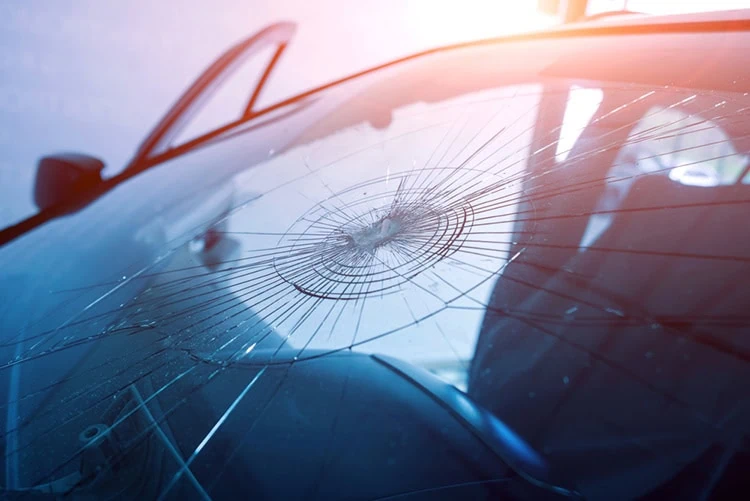
Not all windshield damage is the same, and the type of damage you have determines whether a quick repair is still on the table or whether you’re looking at a full replacement. A chip that’s roughly the diameter of a quarter — about an inch across — is generally repairable using a resin injection process that fills the void, restores structural integrity, and stops the crack from spreading.
A crack that a dollar bill can fully cover often falls into the same category. The damage type matters just as much as the size. A bullseye chip — the classic circular impact mark — is one of the most straightforward repairs. Star breaks, combination breaks, and small floater cracks (cracks that don’t reach the edge of the glass) are also commonly repairable when caught early.
The key phrase there is “caught early.” Once a crack spreads past a certain point, or once it reaches the edge of the glass, the calculus changes entirely.

An edge crack is exactly what it sounds like — a crack that starts within about two inches of the windshield’s outer edge. It might look minor when you first notice it, but edge cracks behave differently from cracks in the center of the glass. The perimeter of a windshield is under constant pressure from the frame, the adhesive seal, and the structural load of the vehicle itself.
That pressure means edge cracks spread faster and more unpredictably than cracks in the middle of the glass. Most edge cracks cannot be repaired. The damage is too close to the frame, the structural integrity of that zone is already compromised, and resin injection won’t hold reliably under that kind of pressure. In most cases, an edge crack means you’re looking at a full windshield replacement — not a repair.
This is why timing matters so much in the fall. If you have an edge crack right now, the answer isn’t to wait and see if it gets worse. It will. Long Island’s fall temperature swings — warm afternoons in the 60s followed by overnight lows in the 30s — put repeated thermal stress on the glass. Every morning that your car sits overnight in the cold and then warms up in the sun is another cycle of expansion and contraction working against that crack.
What might still be a clean, single-line crack today can branch and spread within a few weeks. Road vibration from daily commutes on the Long Island Expressway, the Northern State Parkway, or Sunrise Highway also accelerates edge cracks. That constant low-level vibration transmits through the vehicle and works on your windshield the entire time. An edge crack that might hold for a few weeks in mild conditions can spread noticeably faster under that kind of daily stress.
If you’re not sure whether what you have is an edge crack or something else, get it looked at before the temperature drops further. The repair window for edge cracks is already narrow — and it gets narrower every week into fall.
Glass expands in heat and contracts in cold. That’s not a problem when the glass is intact — it’s engineered to handle it. But when there’s a chip or small crack already in the glass, every temperature swing puts stress on that weak point.
Research on windshield damage consistently shows that a temperature change of 30 degrees or more can make an existing crack worse. On Long Island, fall routinely delivers day-to-night swings of 25 to 35 degrees Fahrenheit, especially from September through November.
There’s another factor that Long Island drivers encounter every October that most people don’t think about: the defroster. The first cold morning of the season, you get in the car, hit the defroster, and blast hot air directly onto a windshield that’s been sitting at 38 degrees overnight. That rapid temperature differential — cold glass, hot air — is one of the most reliable ways to turn a small chip into a spreading crack.
A chip isn’t just a cosmetic blemish — it’s a point where the outer layer of the laminated glass has been compromised. Professional resin repair fills that void and bonds with the glass, restoring strength and preventing crack propagation. But that only works when the damage is still contained. Once a crack spreads from the chip, or once the damage penetrates through more than half the thickness of the glass, repair is no longer an option.
The reason fall is specifically the last cheap fix window — not summer, not early winter — is that summer chips tend to stay stable in the heat. The glass is warm, the temperature swings are smaller, and the defroster isn’t running. Fall is when all of that changes at once. The chip that sat quietly all summer starts seeing 30-degree overnight drops, morning defroster blasts, and the first hard freezes of the season. That combination is what turns a $0 repair into a full replacement job.
Want live answers?
Connect with a First Class Auto Glass expert for fast, friendly support.
This is the question that keeps a lot of Long Island drivers from picking up the phone. They assume there’s going to be a bill, so they put it off. The reality is more favorable than most people realize.
In New York, comprehensive auto insurance typically covers windshield damage. If you have comprehensive coverage and your policy includes a full glass coverage endorsement — which allows your insurer to pay the full cost of glass repair or replacement without applying your deductible — you may owe nothing out of pocket. That’s not a loophole or a special program. It’s a standard option under New York insurance law that many drivers simply don’t know they have.
This is one of the most common reasons Long Island drivers avoid filing a claim for windshield damage. They assume that calling their insurer will trigger a rate increase, so they pay out of pocket — or worse, they just don’t fix it at all.
Under New York insurance law, comprehensive claims — which include glass damage — are generally not treated as surchargeable events. That means filing a glass claim typically does not count against you the way an at-fault accident claim would. Your rates are not automatically going up because you reported a rock chip.
Every policy is different, and the best way to know for certain is to check with your insurer directly before filing. We handle the entire claims process for our customers — the paperwork, the calls, the back-and-forth with the insurance company. You don’t have to figure out the process yourself.
If you’ve been avoiding a repair because you didn’t want to deal with the insurance side of it, that’s not a reason to wait any longer. A chip repair that would cost you nothing under your insurance — because you have full glass coverage and a zero-deductible endorsement — becomes a full windshield replacement if you wait until December and the crack spreads. At that point, the job is bigger, the cost is higher, and the convenience factor goes up too, because a full replacement takes longer than a repair.
For Long Island drivers who commute daily on the LIE or the Southern State and pick up chips regularly, it’s worth knowing that using your glass coverage for a repair doesn’t exhaust some annual limit in most cases. Glass coverage is designed to be used. That’s what it’s there for.
If your vehicle was made after 2016 and has a front-facing camera mounted near the top of the windshield — which is standard on most newer cars — there’s an additional step involved in a full windshield replacement that most drivers don’t know about. That camera powers your lane departure warning, your forward collision alert, and your automatic emergency braking.
When the windshield comes out and a new one goes in, the camera’s field of view shifts slightly. Without recalibration, those safety systems can become unreliable or stop functioning altogether. This is called ADAS calibration — Advanced Driver Assistance Systems calibration — and it’s not optional on vehicles that require it. It’s a safety issue, not a finishing touch.
A windshield replacement without proper ADAS recalibration means you might think your lane departure warning is working when it isn’t. You might assume your automatic braking will engage when it won’t. That’s not a risk worth taking, especially heading into winter driving conditions on Long Island roads.
Not every shop handles ADAS calibration on-site. Some shops replace the glass and send you to a dealership or a separate calibration facility afterward. That means another appointment, another trip, more time out of your day. We handle ADAS calibration on-site, at your location, using manufacturer-approved equipment. By the time we pack up and leave, your safety systems are verified and functional — not something you need to schedule separately.
For drivers with newer vehicles, this is often the detail that changes how they think about windshield replacement. It’s not just a glass job anymore. It’s a safety systems job. Doing it right means doing both the glass and the calibration together, with someone who has the training and equipment to handle both. That’s exactly what we do, and it’s part of every full replacement we complete — no upsell, no separate invoice, no extra trip required.
The chip you’ve been putting off since summer isn’t going to hold through winter. Fall on Long Island — with its temperature swings, morning defrosters, and road salt season just around the corner — is the environment that turns small, cheap repairs into full replacements. The window to fix it quickly, easily, and potentially at no cost to you is open right now. It won’t stay open much longer.
We come to you — your driveway, your office, wherever your car is parked across Nassau or Suffolk County. Chip repairs take 30 to 45 minutes. Full replacements take 60 to 90 minutes, with ADAS calibration included on-site. We handle the insurance paperwork. Every job we do carries a lifetime warranty for as long as you own the vehicle.
If you’re ready to stop watching that crack get longer every cold morning, reach out to First Class Auto Glass. The fix is faster and more straightforward than you probably think — and for many Long Island drivers, it costs nothing at all.
Article details:
Share:
Continue learning: