Front Camera Calibration in Great Neck, NY

Your Safety Systems Work When You Need Them

Professional front camera calibration that keeps your ADAS systems functioning exactly as intended, protecting you and your family on Long Island roads.

A male factory worker wearing a high-visibility vest and safety helmet is standing on an industrial floor, holding and using a tablet computer to monitor or control manufacturing processes, with large machinery and production lines visible in the background.

Hear From Our Customers

Close-up view of a car’s infotainment screen showing the live feed from the rearview camera, with colored guiding lines overlaid to assist with parking; parts of the car’s rear bumper and the surrounding parking lot are visible.

ADAS Calibration Great Neck NY

Drive Confident, Not Concerned

When your windshield gets replaced, your safety systems need recalibration. Period. Your forward collision warning, lane departure alerts, and adaptive cruise control depend on cameras positioned with millimeter precision.

Without proper calibration, these systems can fail when you need them most. Your emergency braking might not engage. Your lane keeping assistance could give false warnings. Your adaptive cruise control might not maintain safe distances.

We restore your ADAS systems to factory specifications using OEM procedures. Your safety features work as designed. Your insurance stays compliant. Your peace of mind returns.

Mobile Auto Glass Great Neck

Twenty Years of Getting It Right

First Class Auto Glass has served Great Neck and Long Island since 2016, but our owner brings over 20 years of industry experience to every job. We’re Dinitrol certified and a certified New York State mobile repair shop.

Unlike the large chains, we’re owner-operated. Every calibration gets personal attention. Every customer gets our direct phone number. Every job comes with a lifetime warranty.

We’ve completed over 10,000 successful services across Suffolk and Nassau counties. Great Neck drivers trust us because we understand local driving conditions—from the morning backup on Northern Boulevard to navigating the tight parking near the LIRR station.

Close-up of a car’s rearview camera lens mounted above the license plate on the back of the vehicle, showing the small, weather-resistant housing and surrounding body panel details.

Windshield Camera Calibration Process

Precision Calibration, Zero Guesswork

Our calibration process starts with a comprehensive diagnostic scan. We identify which ADAS systems need recalibration and check for any existing error codes that could affect the process.

Next comes the actual calibration. Depending on your vehicle, we perform either static calibration using precision targets and laser alignment tools, or dynamic calibration involving specific driving maneuvers on suitable roads. Some vehicles require both methods.

We conclude with verification testing. Every system gets checked to ensure proper function. We perform a final diagnostic scan to confirm no new error codes have appeared. You get documentation showing everything was completed to OEM specifications.
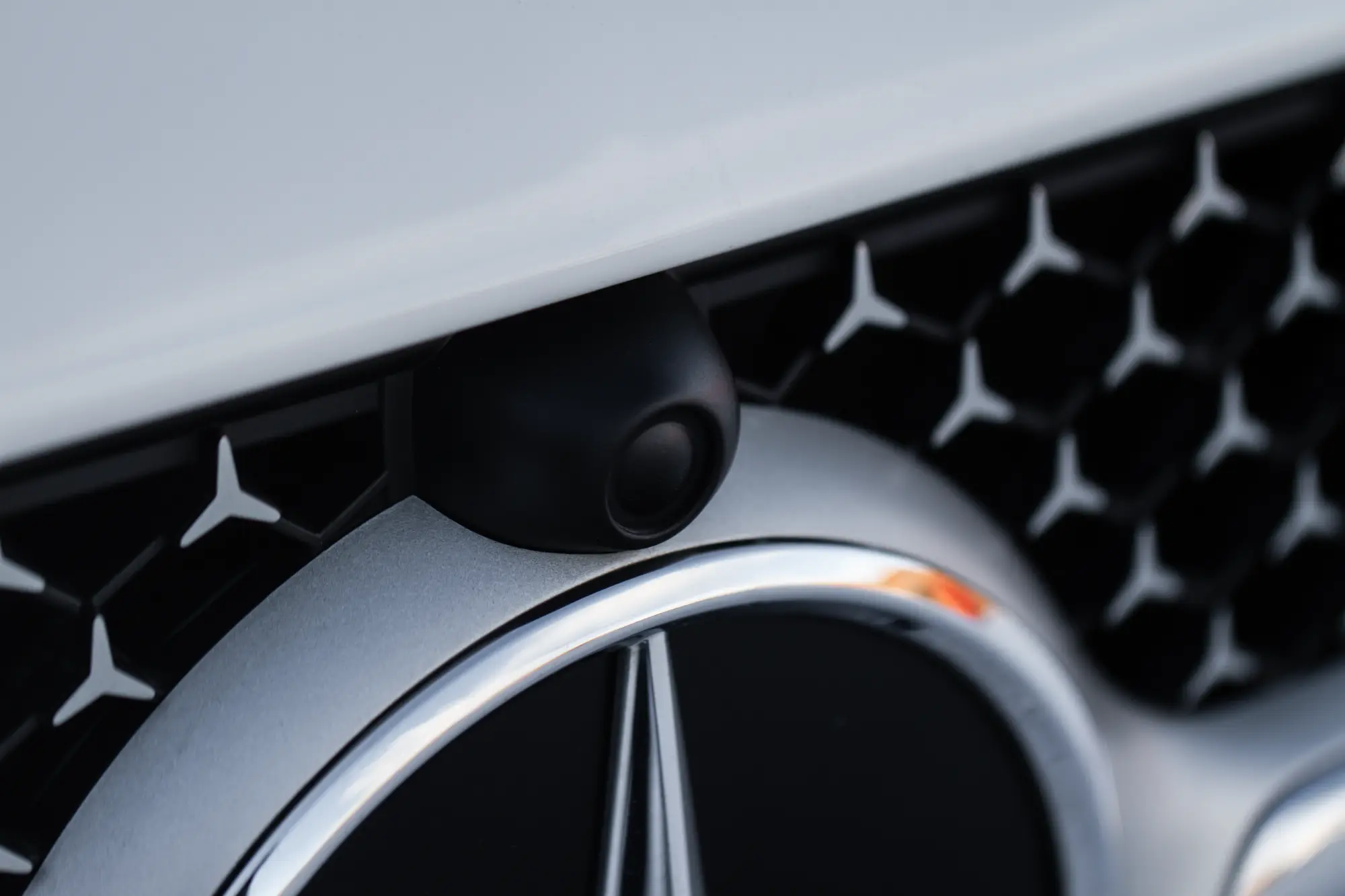
Close-up of the front section of a car, showing detailed features such as the grille, headlights, and body contours, with reflections highlighting the paint finish.

Ready to get started?

Explore More Services

About First Class Auto Glass

Get a Free Consultation

Camera Calibration After Windshield Replacement

What Great Neck Drivers Need to Know

Nearly 80% of vehicles sold today have forward-facing camera systems. These cameras power your lane departure warnings, forward collision alerts, automatic emergency braking, and adaptive cruise control. They’re mounted behind your rearview mirror and rely on precise positioning to function correctly.

When your windshield gets replaced, even using identical OEM glass, the camera position can shift by fractions of an inch. That’s enough to throw off your entire safety system. Your insurance company knows this—many now require calibration documentation to validate claims.

Great Neck’s mix of highway driving, suburban streets, and congested areas demands properly functioning ADAS systems. From merging onto the Long Island Expressway to navigating school zones, your safety features need to respond accurately. We ensure they do.

Graphic representation of an autonomous vehicle equipped with multiple sensors, cameras, and radar units detecting surrounding objects, pedestrians, and other vehicles on the road, with digital overlays illustrating detection zones and safety ranges.
Yes, absolutely. Nearly all vehicle manufacturers require ADAS calibration after windshield replacement, even when using identical OEM glass. The cameras behind your windshield need millimeter-precise positioning to function correctly. Even a slight misalignment can cause your forward collision warning to trigger false alarms, your lane departure system to malfunction, or your adaptive cruise control to maintain incorrect following distances. Some systems may stop working entirely until properly calibrated. Your insurance company likely requires calibration documentation to validate claims. Without it, you could face liability issues if your safety systems fail to perform as expected during an incident.
Most calibrations take 30 minutes to 2 hours, depending on your vehicle’s specific systems and calibration requirements. Some vehicles need only static calibration, which we can complete in our controlled environment using precision targets and alignment equipment. Other vehicles require dynamic calibration, involving specific driving maneuvers on suitable roads. Certain makes like Subaru require both static and dynamic calibration, which extends the process but ensures complete accuracy. We’ll tell you exactly what your vehicle needs during our initial diagnostic scan. Our mobile service means you don’t waste time driving to a shop—we handle everything at your location in Great Neck.
Skipping calibration puts you at serious risk. Your safety systems may provide inaccurate warnings, fail to detect obstacles properly, or stop working entirely. Forward collision warning might not activate when needed. Lane departure alerts could trigger constantly or not at all. Your insurance coverage could be compromised. Many insurance companies now require calibration documentation for windshield replacement claims. Without it, you might face liability issues if your uncalibrated systems contribute to an accident. You’re also violating manufacturer specifications. Your vehicle’s safety features were designed to work together as a system. When one component is misaligned, it affects the entire network of sensors and cameras that keep you safe.
No, not all shops have the equipment or training for proper ADAS calibration. It requires specialized diagnostic tools, precision alignment equipment, and specific calibration targets that many shops don’t invest in. The technician needs training on each vehicle’s specific calibration procedures. Different makes and models have different requirements. Some need static calibration, others dynamic, and some require both. The process must follow exact OEM specifications. We’ve invested in the proper equipment and training. We’re certified to perform calibrations on the vehicles we service in Great Neck and throughout Long Island. Our technicians follow manufacturer procedures exactly, ensuring your systems work as designed.
Most comprehensive insurance policies cover ADAS calibration when it’s required after windshield replacement. You typically pay only your deductible, and the insurance company covers the calibration costs along with the windshield replacement. We work directly with hundreds of insurance companies and handle all the paperwork for you. We verify your coverage, file your claim, and coordinate payment so you don’t have to deal with the hassle. In most cases, filing a claim for windshield replacement and calibration won’t increase your comprehensive coverage premiums. Your insurance company recognizes that proper calibration is essential for safety and liability protection.
Any windshield replacement requires ADAS calibration if your vehicle has forward-facing cameras or sensors. You might also need calibration after collisions, suspension work, wheel alignments, or if ADAS warning lights appear on your dashboard. Common signs include false lane departure warnings, adaptive cruise control maintaining incorrect distances, or forward collision alerts triggering inappropriately. Some systems display specific error messages indicating calibration is needed. The safest approach is professional evaluation. We perform diagnostic scans to identify which systems need attention and determine the appropriate calibration procedures. Don’t guess with your safety—get a proper assessment from certified technicians who understand ADAS technology.